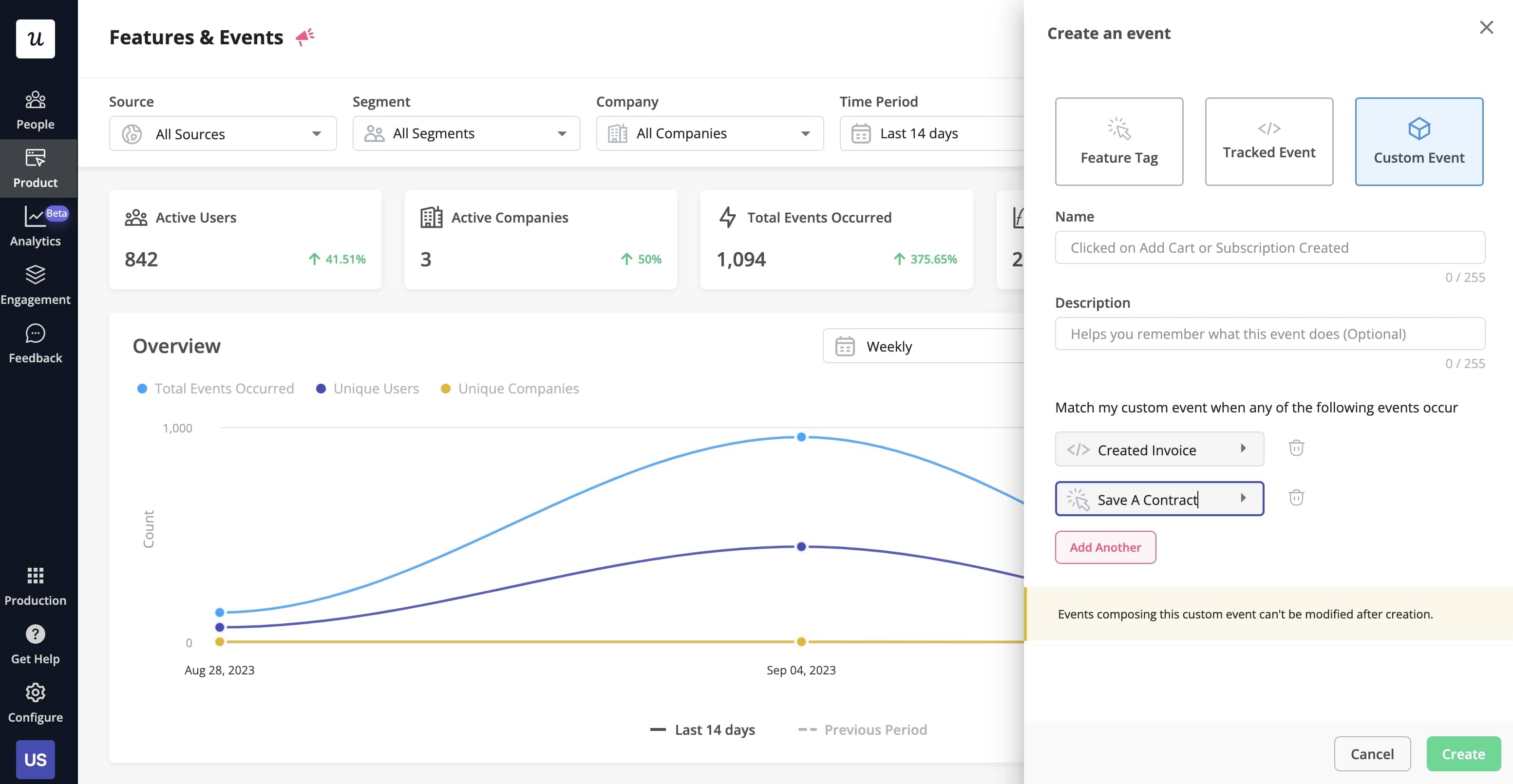








As of November 27, 2026, Userpilot's pricing page shows Starter at $299/month for up to 2,000 MAUs, Growth from $849/month with a published 0–100,000 MAU range, and Enterprise as custom pricing. The real buying question is not whether $299 looks reasonable. It is whether your team can stay on Starter once you need funnels, resource center content, email engagement, session replay, mobile, or procurement controls.
My short answer: Userpilot is a sensible shortlist option for growth-stage SaaS teams that want onboarding plus stronger product analytics, but Growth is the real budget number for many serious teams.
Verified on November 1, 2026 against Userpilot's official pricing, plan overview, enterprise, and services pages.
Pricing snapshot
| Plan | Public price | What it is built for | Main catch |
|---|---|---|---|
| Starter | $299/month | Small SaaS teams starting with onboarding and lightweight product insight | Up to 2,000 MAUs, 3 seats, 1-year retention, and several important analytics and engagement capabilities stay locked out |
| Growth | From $849/month | Growth-stage teams that need deeper analytics, resource center, surveys, and lifecycle engagement | 5,000 free session replays/month; unlimited capture and mobile engagement can add to the bill |
| Enterprise | Custom | Larger teams needing governance, integrations, security review, and negotiated support | Pricing and packaging become sales-led |
Userpilot prices around monthly active users, not event volume. That is a meaningful positioning difference because many buyers expect usage spikes to affect instrumentation cost. Here, your pressure point is active-user growth and feature tier, not event counts.
The decision in 60 seconds
Choose Starter if your team mainly needs web onboarding flows, segmentation, usage trends, and NPS, and you can live without funnels, retention, resource center, advanced surveys, email engagement, or session replay for now.
Budget for Growth if onboarding is becoming an operating channel across product, growth, and customer success. That is the plan where Userpilot opens up advanced analytics, event autocapture, resource center, advanced surveys, and email.
Start an Enterprise conversation if SSO, activity logs, data warehouse sync, custom roles, procurement review, or multi-team governance will decide the deal.
Compare alternatives if your real buying job is broader than onboarding plus analytics. If you also need announcements, changelog, roadmap, feedback, help content, or lower-cost stack consolidation, do not judge the category on Userpilot's pricing alone.
Growth includes 2,000 MAUs at its starting price. Ask for a quote at your peak monthly usage before using $849 in a budget.
How the pricing model works
The visible commercial ladder is simple. The budgeting risk is what moves you between rungs: more MAUs, deeper analytics needs, extra channels, and enterprise controls.
Userpilot defines an MAU as a user it identifies after a tracked action—such as a page view, custom event, or autocaptured interaction—during a calendar month. A user you target for re-engagement but who does not take a tracked action does not count as an MAU, according to Userpilot's pricing explanation. Model peak months and the users your instrumentation actually identifies, not just the number of accounts in your database.
The public price cards do not spell out every billing term. Userpilot's own plan overview says the $299 Starter price is billed annually; confirm the Growth cadence, MAU allowance, renewal terms, and any overage behavior in the quote before comparing annual budgets.
What each plan actually buys
Starter
Starter is for teams beginning their product-growth setup.
On the official pricing page, Starter includes:
- up to 2,000 monthly active users
- in-app user engagement
- user segmentation and tracking
- analyze usage trends
- NPS survey
The detailed comparison further shows:
- up to 10 segments
- 3 seats and 1 year of data retention
- users and accounts
- user and company profiles
- page tracking and programmatic events
- flows, spotlights, banners, embeds, and checklists
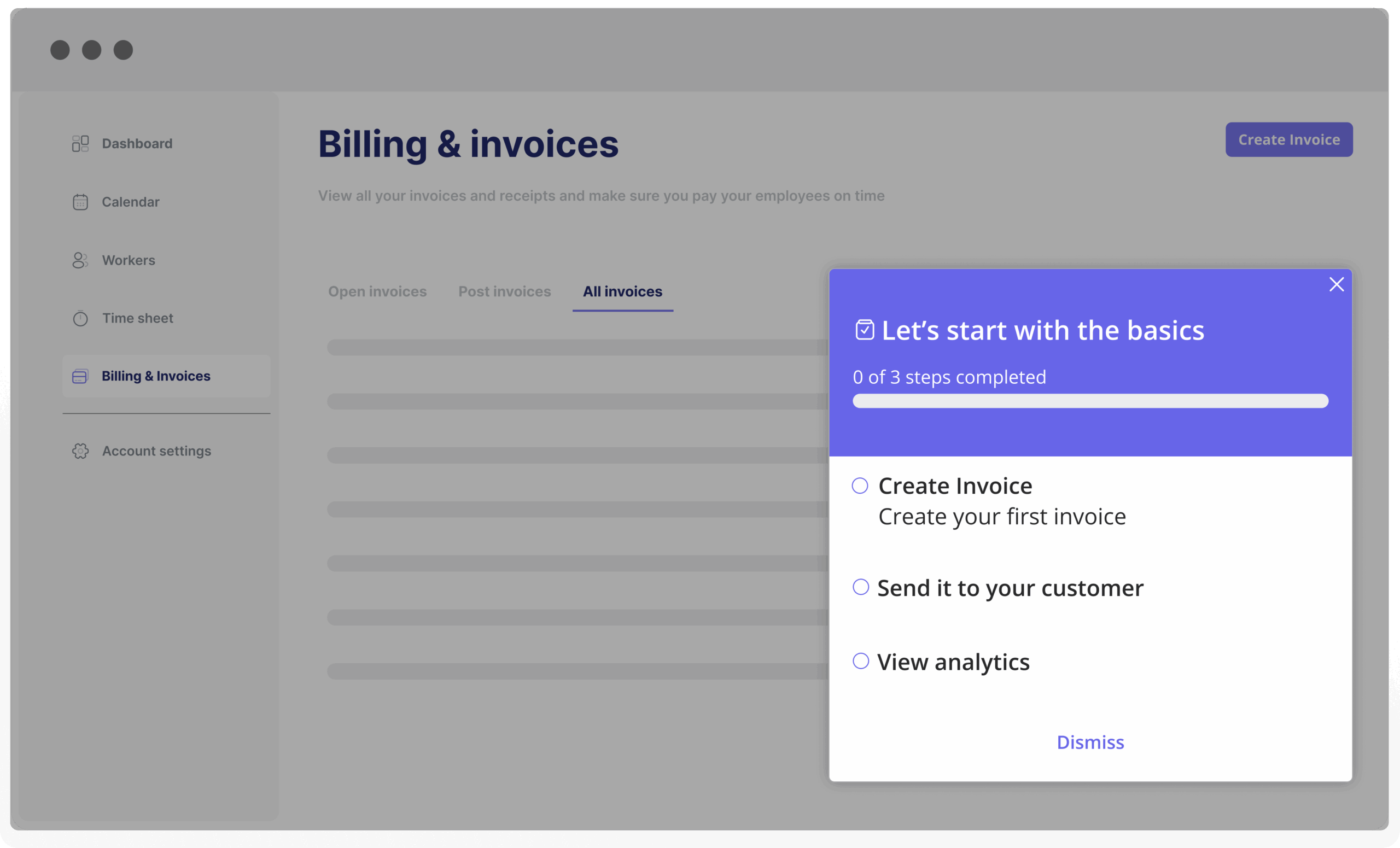
Product screenshot source: Userpilot onboarding checklists.
The real constraint is what Starter leaves out. The same page shows no access to:
- funnels
- retention
- paths
- custom dashboards
- retroactive event autocapture
- resource center
- workflow automation
- advanced surveys
- session replay
- mobile engagement
Starter is a fine buy when your onboarding job is still narrow:
- one main web onboarding motion
- a small team running it
- simple segmentation
- NPS plus basic trends
It is a risky buy when your plan is "we will start simple and expand later" but your roadmap already includes heavier activation analysis or lifecycle messaging.
Growth
Growth is where Userpilot starts behaving like a broader product-growth platform instead of a lighter onboarding tool.
The public pricing page lists Growth at from $849/month and highlights:
- advanced product analytics
- event autocapture
- resource center and advanced in-app surveys
- email engagement
- 100,000 free emails per month
- 5,000 free session replays per month
- 3-year data retention
- mobile engagement as an add-on
The detailed comparison separately marks unlimited session capture as an add-on and lists 30-day replay retention for Growth. In other words, do not treat “session replay” as unlimited inside the $849 starting price; ask which replay allowance, retention period, and capture add-on your quote includes.
The current pricing page also presents AI analytics as an add-on for Growth and Enterprise, with 5,000 free AI session analyses shown for those plans. Treat that as an additional packaging decision, not as a reason to assume AI analysis is included in the $849 starting price.
The plan matrix also shows Growth moves from 10 segments to unlimited segmentation and opens the analytics model beyond simple trends.
It also changes the operating shape of the account. Starter caps you at 3 seats and 1 year of data retention, while Growth moves to 15 seats and 3 years. That matters once product, growth, and customer-success teammates all need access to the same onboarding system.
This is the real budget line for teams asking questions like:
- where do users drop in onboarding funnels?
- which paths lead to activation?
- which segments need different onboarding or nudges?
- how do we connect onboarding to surveys, help, and lifecycle communication?
The price jump matters. Moving from Starter to Growth is a $550/month increase before replay or mobile add-ons. That is roughly 2.8x higher monthly spend.
That does not make Growth overpriced. It means Userpilot is not an inexpensive tour builder once your team wants platform-level analytics and engagement depth.
Enterprise
Enterprise is the governance and scale layer.
Userpilot's pricing page says Enterprise adds:
- premium integrations
- bulk data export and import
- data warehouse sync
- custom roles and permissions
- SAML SSO and activity logs
- security audit and compliance
- custom contract and SLA
The enterprise page adds more context:
- no limits on seats, data tracking, or sessions
- pricing based on MAUs rather than in-app events
- support for multiple products, teams, or geographies with dedicated application keys
Userpilot's services page also emphasizes advanced security, user management, optional dedicated EU hosting, and professional-services-style support. It publishes reference scopes of roughly 40 hours for standard migration and 20 hours for Lift-off services, while the pricing matrix lists professional services and consulting as add-ons for Growth and Enterprise. That is a strong signal that the Enterprise motion is a real platform purchase, not just a bigger self-serve subscription.
One source nuance matters for planning: Userpilot's official plan overview describes Enterprise as a 10,000+ MAU fit, while the detailed pricing matrix labels Enterprise's MAU range custom. Treat 10,000 as fit guidance, not a guaranteed cutoff or included allowance; ask for the MAU definition, allowance, and expansion terms in the order form.
Realistic budget scenarios
Userpilot does not publish every expansion step publicly, so the honest way to model it is to use the visible plan floor and ask what will force you upward.
| Team situation | Likely starting point | What usually changes the cost next |
|---|---|---|
| Early-stage SaaS with one web onboarding motion | Starter at $299/month ($3,588 annual equivalent) | Crossing 2,000 MAUs or needing funnels, retention, resource center, or email |
| Growth-stage SaaS running onboarding across product, growth, and CS | Growth from $849/month ($10,188 annual equivalent) | Higher MAUs, replay capture beyond the included allowance, mobile engagement, and broader team usage |
| Multi-team or compliance-heavy rollout | Enterprise conversation | SSO, custom permissions, warehouse sync, activity logs, SLA, procurement, and regional hosting |
If your team already knows it needs funnels, retention, a resource center, or cross-functional access, treat Growth as the real budget floor instead of anchoring on $299.
Free trial vs paid plans
Userpilot's public pricing page shows a Free Trial path and a Get Started Free CTA on Starter, but the visible commercial structure is still a paid three-plan ladder: Starter, Growth, and Enterprise. I did not find a separate forever-free tier with its own public limits on the current pricing page.
The important budgeting question is not whether you can start a trial. It is whether your team can stay inside Starter once the onboarding program expands.
The cost drivers buyers underestimate
1. Growth is the real benchmark
Most comparison posts over-rotate on the $299 entry point.
For many SaaS teams, the real comparison point is Growth. If your buying criteria include funnels, retention, deeper surveys, resource center, email, or richer analytics, Starter is not the steady-state plan.
2. MAUs get more expensive as adoption works
MAU pricing is predictable in one sense. You are not paying by event volume.
It is still a growth tax. If onboarding succeeds, more active users can push the contract upward over time. Budget against today's MAUs, your likely six-month MAUs, and your realistic year-ahead MAUs.
3. Add-ons matter
Userpilot highlights 5,000 free session replays per month on Growth, while the detailed matrix marks unlimited session capture as an add-on. Mobile engagement is an add-on on Growth and an Enterprise inclusion.
If either of those is already on your requirements list, treat Growth as the floor, not the all-in number.
4. Governance turns this into a platform deal
SSO, activity logs, data sync, custom permissions, SLA terms, and security review all push the buying motion away from self-serve economics and toward negotiated platform procurement.
That is normal for larger organizations. It is just important to model early.
Team-size fit
When Userpilot pricing makes sense
Userpilot is a strong shortlist candidate for:
- growth-stage B2B SaaS teams
- product-led companies that want onboarding plus stronger analytics
- teams that want public mid-market pricing instead of starting with a blank demo form
- buyers who want one tool to connect in-app guidance, resource center, surveys, and product analytics
When the pricing gets harder to justify
Userpilot becomes harder to justify when you sit on either side of its sweet spot.
On the lower end, smaller teams may find that Starter looks affordable but quickly feels cramped once the onboarding program expands.
On the higher end, Enterprise may fit operationally, but the buying motion starts behaving like a negotiated platform sale with the usual governance overhead.
You should also pause if your real buying job includes:
- announcements and changelog workflows
- roadmap communication
- broader feedback collection and prioritization
- help-center content
- reducing the number of separate adoption tools in the stack
Those needs are not the core Userpilot pricing story. They often lead buyers toward a broader platform comparison.
Implementation, onboarding, and vendor support
Userpilot's public commercial story is stronger on product capability than on fully itemized implementation scope. That means buyers should ask directly what onboarding help, migration support, and success coverage are included at each plan level instead of assuming they are bundled evenly.
The public Enterprise and Services pages do make one thing clear: Userpilot treats larger deployments like a platform sale. Dedicated support, custom SLA terms, security review, advanced user management, professional services, and optional EU hosting all show up in that motion. Userpilot's plan overview says professional services and consulting are add-ons for Growth and Enterprise, so do not assume migration or strategy help is included in the base rate.
For growing SaaS teams, the practical takeaway is simple: if your rollout will need deep implementation help, cross-team governance, or procurement support, model that early rather than treating it as a late-stage contract detail.
What to compare before you buy
Userpilot vs Userflow
Userflow is usually easier to justify when you want a simpler web-onboarding buy and cleaner self-serve math.
Userpilot makes the stronger case when product analytics depth matters alongside onboarding.
Userpilot vs Appcues
Appcues is closer when the evaluation is really about broader engagement and lifecycle orchestration.
Userpilot is often easier to model today because the public entry numbers are clearer, but Appcues can still be relevant if the workflow is more messaging-heavy than analytics-heavy.
Userpilot vs Pendo
Pendo is still the heavier analytics-and-governance comparison.
Userpilot is more approachable for many growth-stage SaaS buyers because the entry pricing is public and the operating model is less enterprise-heavy.
Userpilot vs Userorbit
Userpilot is a strong option if the job begins with onboarding plus analytics.
Userorbit becomes more compelling when the buying job is broader: onboarding, announcements, changelog, feedback, roadmap, help content, and analytics in one connected workflow. If stack consolidation matters as much as onboarding polish, compare Userpilot against Userorbit's onboarding workspace, current pricing, the broader onboarding software pricing comparison, and the practical Userpilot migration guide.
Compare the workflow, not only the entry plan
Questions to ask before the demo
Before you buy, get clear answers to these:
- What will our MAU count likely be in 6 and 12 months?
- Can we realistically stay on Starter, or are we already a Growth buyer?
- Do we need resource center, advanced surveys, funnels, or retention reporting immediately?
- Are session replay or mobile must-haves, and if so, what do they add to the contract?
- Will security, SSO, activity logs, data sync, or EU hosting requirements push us into Enterprise anyway?
These questions matter more than the headline $299.
Frequently asked questions about Userpilot pricing
Short answers for SaaS teams comparing Userpilot plans, cost drivers, and alternatives.
Final take
Userpilot pricing is clearer in November 2026 than many older comparison pages suggest.
The public ladder is visible: Starter at $299/month, Growth from $849/month, and Enterprise as custom. That clarity is useful. The important catch is that the most interesting parts of the platform start showing up once you move beyond Starter, while replay beyond the included Growth allowance and mobile still add budget pressure.
For SaaS buyers, the practical question is simple: Are you buying a lean onboarding layer, or are you already buying a broader product-growth operating system?
If it is the first job, Userpilot may fit well. If it is the second, compare it against the broader onboarding pricing landscape and a more consolidated onboarding software shortlist before you commit.