










A customer posts “My export is still processing” in your shared Slack channel. The account manager adds an eyes emoji. An engineer starts investigating. At shift change, who owes the customer an answer?
Give a shortlisted support inbox one working week to handle that case. By Friday you want the customer's view of the thread, the incoming agent’s view of the investigation, and a price for running the workflow you tested. If you're still building a shortlist, start with our B2B SaaS support software comparison.
Monday — choose two channels and define a pass
Review a recent week in two customer channels. Mark each top-level message as a new request, a follow-up to existing work, or ordinary account conversation. Include questions that customers asked without tagging support. This sample tells you what an inbox would capture and what an agent would have to clean up.
For a dedicated support channel, automatically opening a case from a new customer message may be a good default. In a channel shared by sales, implementation, and support, that same rule might put meeting logistics in the queue. A manual trigger gives the team control, but someone has to notice the request. Ask each vendor to show the trigger you want and what happens when a customer replies to an older thread.
Run the test with someone in a second workspace. Slack Connect joins people from different organizations in the same channel. An employee posting from your own company can produce a different result from a customer. Slack also says channel members can see messages posted there by apps and bots. Use a designated internal note for staff discussion and check the result from the external participant’s view. Slack Connect guide
Tuesday — verify who and what the inbox sees
Ask your Slack admin to connect a designated test channel. Have a colleague from a second workspace act as the customer. Have them send an ordinary message, an explicit help request, and a reply under that request. Repeat the sequence in a private shared channel if your customers use one. Record the message, expected case count, actual case count, and agent assigned. Also record any change to setup that was needed to capture the message.
Two documented behaviors illustrate why setup belongs in the pilot. Plain checks the sending user and channel configuration when it creates a thread. Pylon requires a separate connection for each Slack workspace and enables tracking in the relevant channels. If a test message goes missing, capture the channel and sender before assuming the inbox has lost the conversation. Plain’s Slack thread rules · Pylon’s Slack setup
Wednesday and Thursday — run one case through a shift change
Use a test channel with a colleague in a separate workspace playing the customer. Give a support agent and an engineer access on your side. Use a fictional export and customer name so everyone can inspect both sides of the conversation.
- Open the request. Have the customer write “Yesterday’s export still says processing. Can you check?” without a mention. Then add “It was the November report” as a thread reply. Record how many cases appear, which account they belong to, and whether the agent can see both messages together.
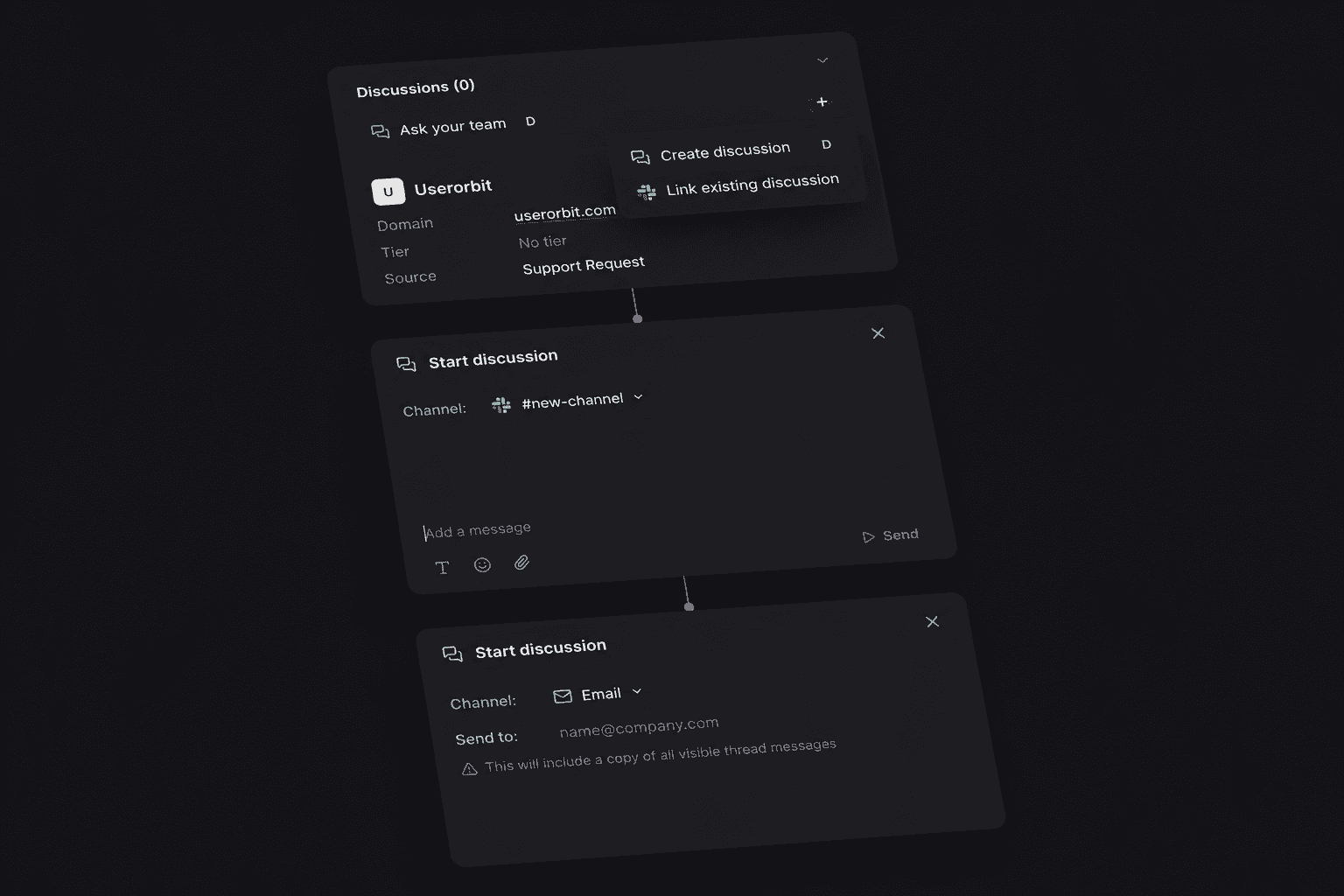
- Hand it to engineering. Assign the case to an agent. Have them add the private note “Please check the export worker” and request an engineer’s input. Look at the channel from the customer’s workspace. Only the intended customer-facing messages should appear there.
- Change shifts. Give a second agent the case. Ask them to find the owner, the investigation so far, and the next update the customer was promised. Count any details they have to ask the first agent to repeat.
- Send the answer. Have the second agent reply from the inbox that the export is ready. Ask the customer to locate that reply in the original thread. Check the sender name and whether Slack also received a duplicate top-level message.
- Reopen the conversation. Close the case. Have the customer reply the next morning that the download link expired. Find the follow-up in the queue and identify who now owns it. If it creates a new case, check whether the next agent can recover the earlier investigation.
Write down the observed outcome beside each step. “One case, one owner, reply visible in original thread” is evidence you can compare across tools. A promise to investigate a missing reply is a reason to repeat that step before rollout.
Friday — decide which channels to roll out
Give vendors the same hypothetical account: four full-time agents, eight engineers who occasionally add private notes, and 40 customer channels across two workspaces. Substitute your real counts before you request a quote. Ask which people require a paid seat, which plan includes the routing rules you tested, and what changes if you add another workspace. If pricing depends on product usage, include your monthly active user count as well.
Use the trial record to make a rollout decision. A customer-visible internal note blocks deployment until you fix the cause and repeat that test. A missed untagged request blocks rollout in any channel where customers expect to ask for help in plain language. A noisy queue may be workable if a rule change removes the unrelated conversations and still captures every request in your sample. Assign an owner and a retest date to each open issue.
If the case passes, start with channels that use the configuration you actually tested. Give the incoming agent responsibility for checking the unassigned queue after the first shift change. For a Userorbit evaluation, request access to the Support Suite on Scale or Enterprise and bring the fictional export case to the demo. Your team can use the same script to assess Slack alongside email and in-app requests. Support Suite · Userorbit plan details