










Most product teams publish release notes that users never read.
Not because the writing is bad. Because the page exists somewhere users don't go. A feature ships, someone adds a line to the changelog, and the update disappears. The communication layer breaks down after the code merges — and most teams don't notice until they hear "I didn't know you built that" on a customer call.
That's the real problem. It's not that teams skip release notes. It's that publishing isn't the same as communicating.
The best release notes tools fix both sides. They make publishing faster, and they get updates in front of the right users — inside the product, not on a page that requires a separate visit.
This guide covers the best release notes tools in 2026 for SaaS teams that want updates to actually land.
What good release notes software does
Publishing is the easy part.
Most tools can generate a hosted changelog page. The harder job is distribution — getting updates to users who aren't actively looking for them.
Here's what separates strong tools from basic ones:
- Publishing speed — Can you move from shipped feature to readable update without manual reformatting?
- Distribution surfaces — Does the tool deliver updates via in-app widgets, announcement centers, or email digests?
- Audience targeting — Can you show updates to the right segment, not everyone?
- Adjacent workflows — Does it connect to onboarding, feedback, or analytics, or does it live in isolation?
- Maintenance reality — Can a small team keep it running every week without creating a side project?
That last point gets overlooked. A release notes tool nobody maintains isn't a system. It's a liability.
How we evaluated these tools
We compared each platform on what matters most to product teams, product marketers, and SaaS operators who need release communication to stay consistent.
We weighted in-app distribution and targeting more heavily than page design. A beautiful changelog that users never visit is less useful than a plain update they actually see. We also favored tools that a lean team can run without hiring someone to manage the workflow.
Best release notes tools in 2026
1. Userorbit
Userorbit is the strongest release notes tool for SaaS teams that want release communication tied to adoption.
Userorbit release notes and changelog software
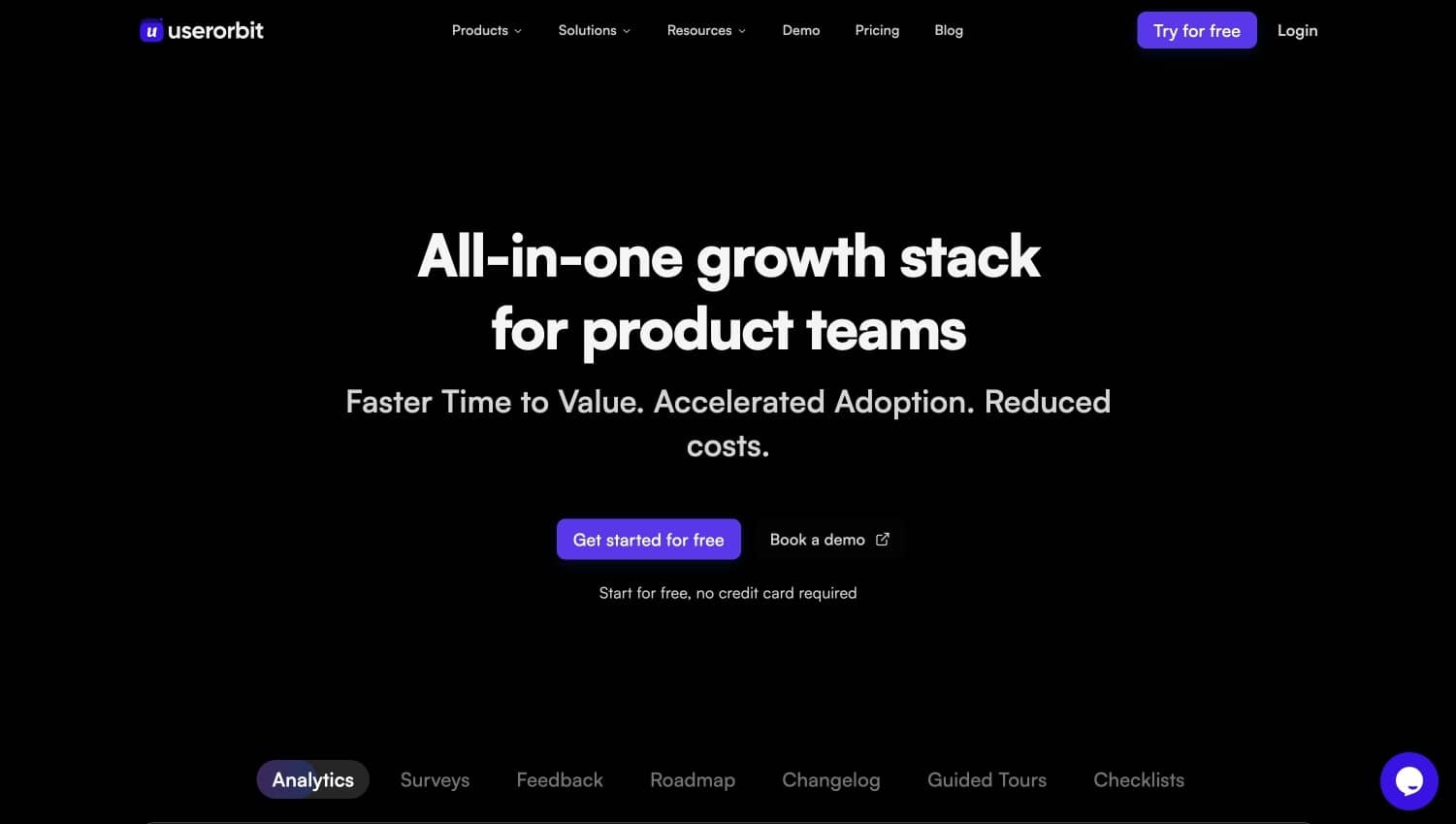
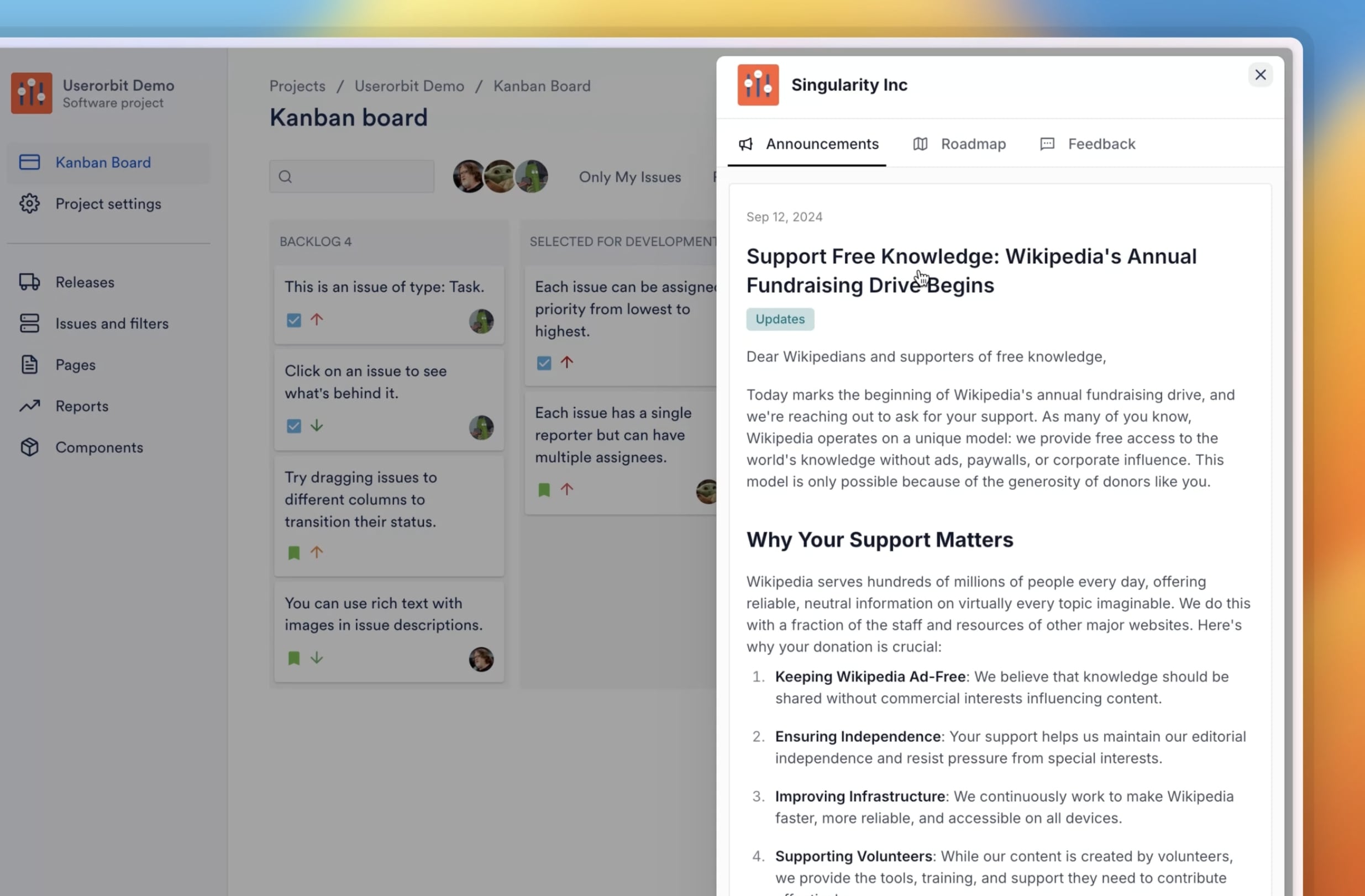
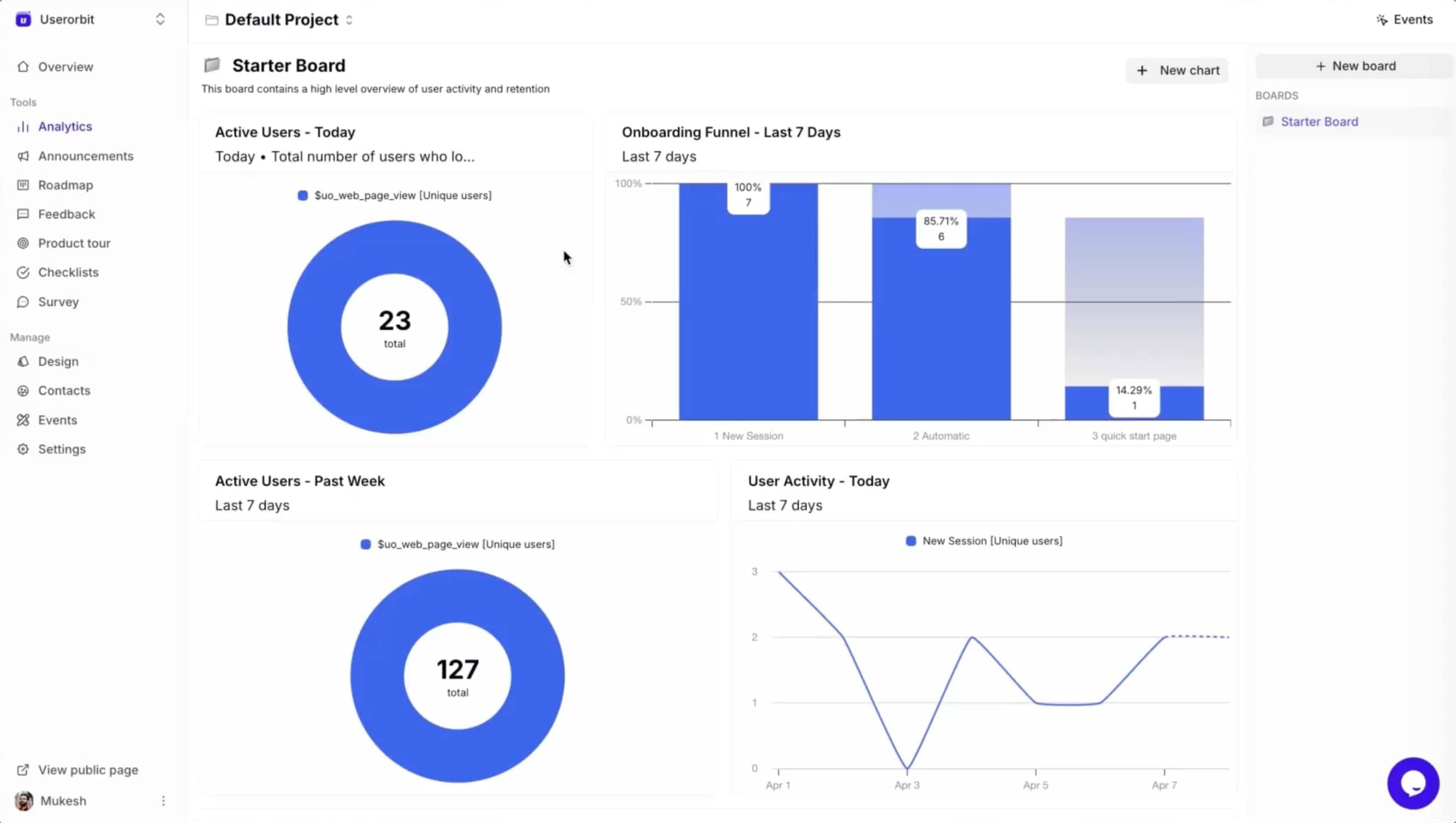
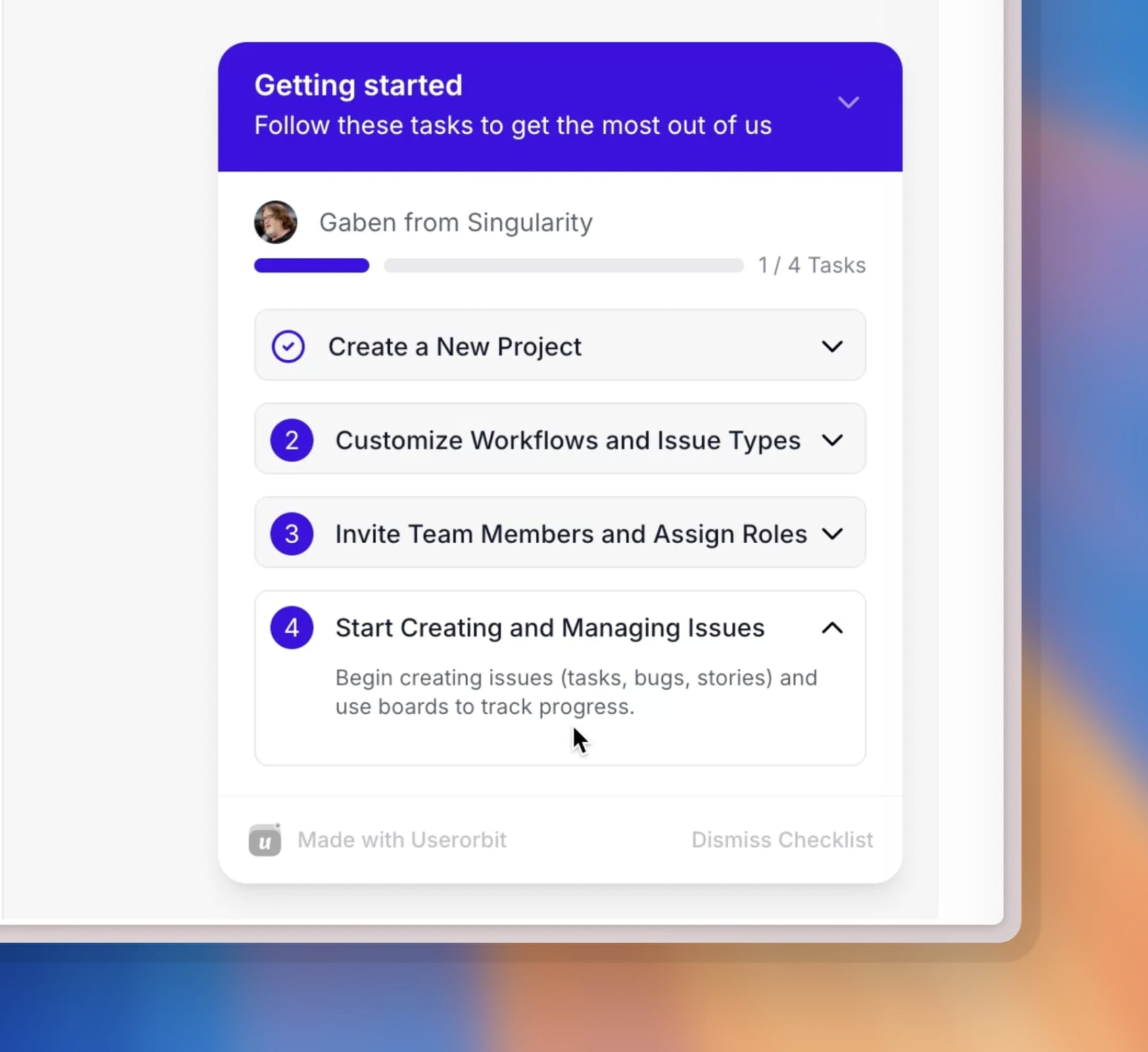
Most release notes tools stop at publishing. Userorbit goes further by connecting release notes with announcements, onboarding, segmentation, feedback, and adoption analytics in one product.
That matters when your real goal isn't just documenting launches — it's getting users to notice and use what shipped. If a feature goes unnoticed, the release note didn't do its job.
Best for: Product-led SaaS teams that want release notes, in-app announcements, and post-launch adoption workflows in the same platform.
Strengths:
- Release notes, changelog publishing, and announcements in one system
- In-app delivery that brings updates to users inside the product
- Segmentation and targeting for more relevant release communication
- Onboarding and guidance workflows for larger launches
- Analytics that show what happened after the announcement
Tradeoff: Teams that only need a simple public release log won't use the broader adoption features right away.
Turn release notes into product adoption
2. LaunchNotes
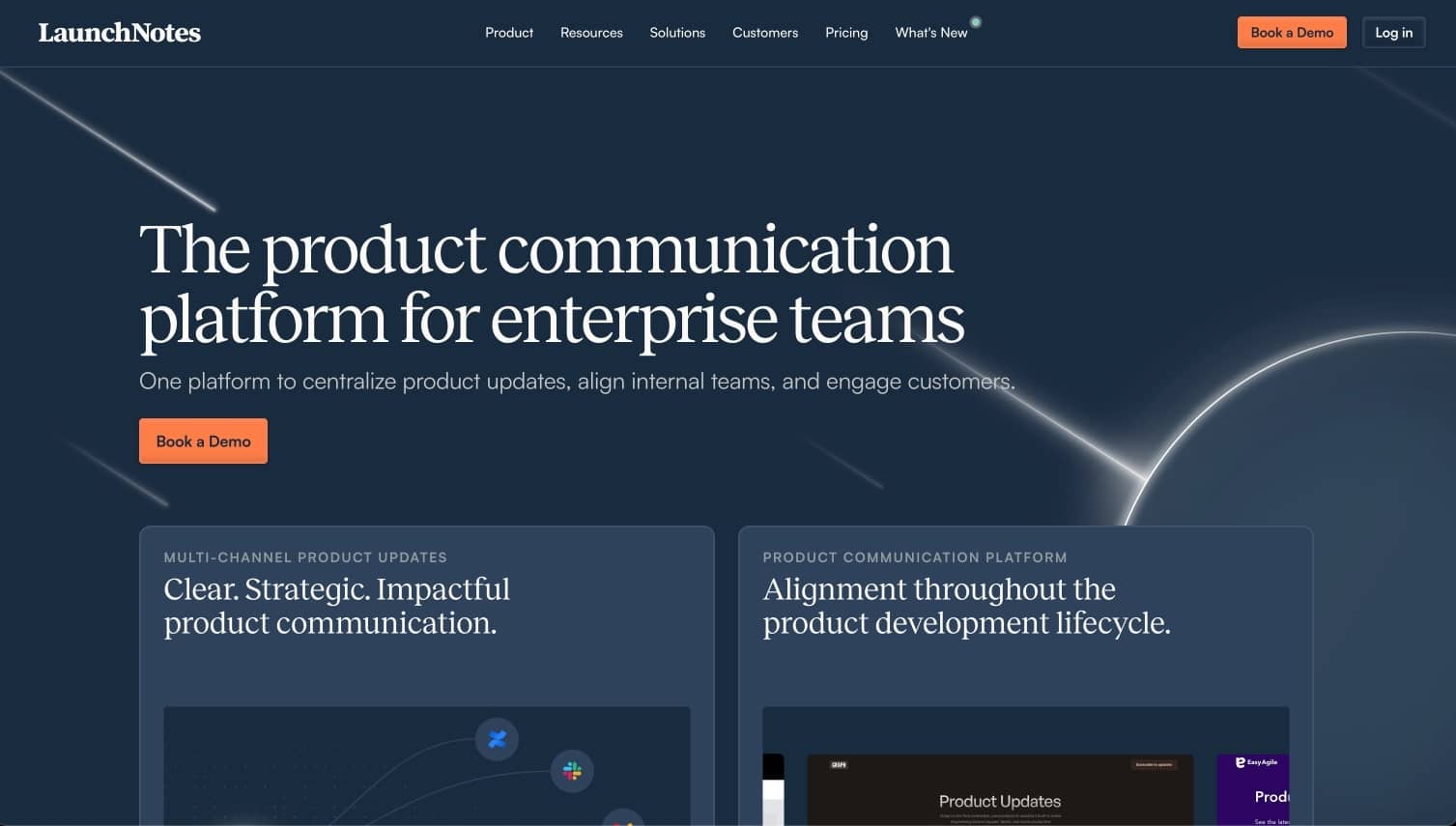
LaunchNotes is built for companies that treat release communication as a formal operating motion.
It works well when updates need to reach customers, internal teams, partners, and executives through structured subscriber workflows. If your launches involve multiple stakeholders and you need everyone in sync, LaunchNotes handles that coordination better than most tools in this category.
Best for: B2B SaaS and platform teams that need polished release communication across multiple audiences.
Strengths:
- Mature release communication workflows
- Audience subscription and notification structure
- Strong fit for planned launches and cross-functional coordination
- More enterprise-ready than lightweight changelog tools
Tradeoff: It feels process-heavy for startups that mainly want a faster way to publish visible updates.
3. AnnounceKit
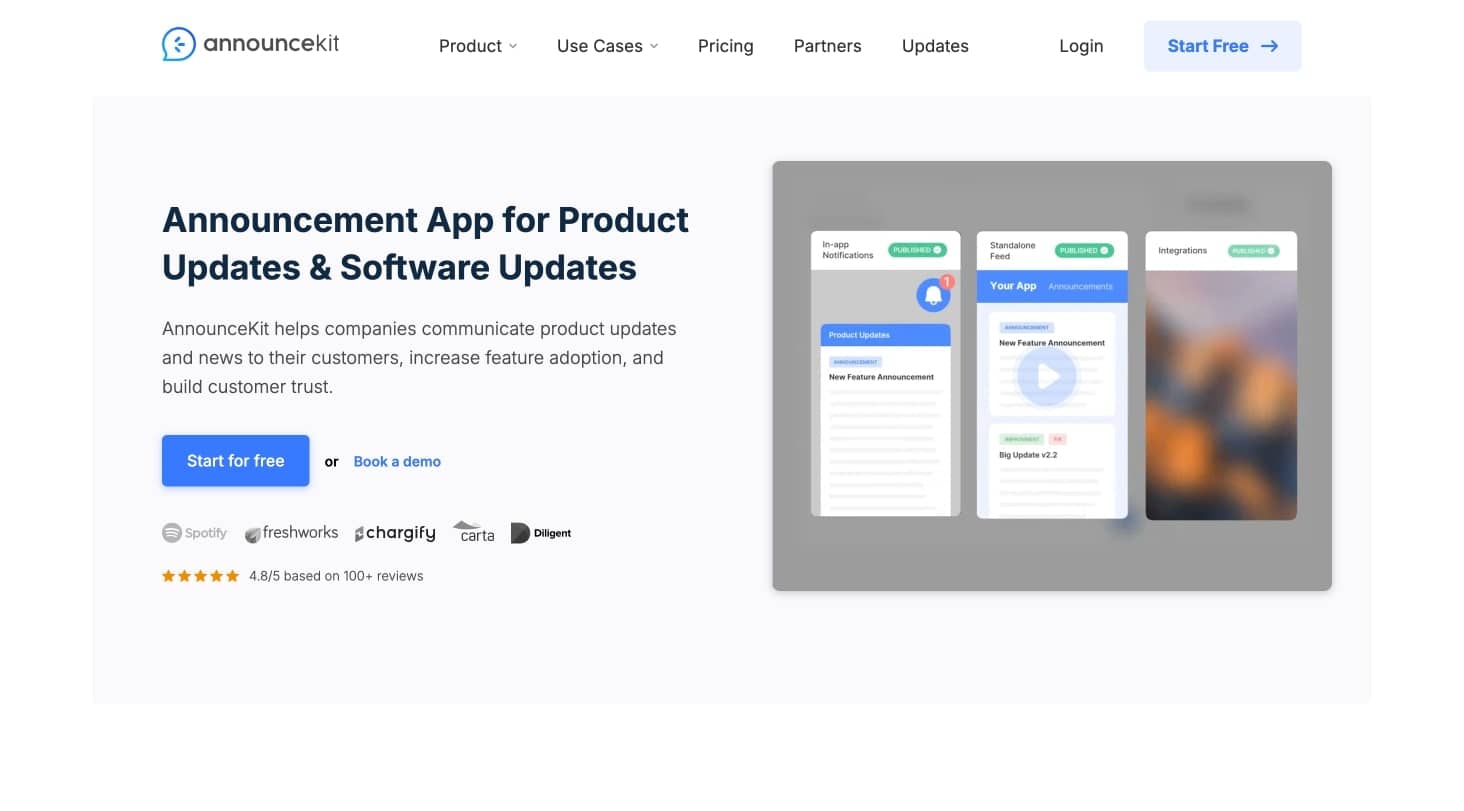
AnnounceKit is a practical choice for teams that want an attractive release notes page and embeddable widgets without a long setup cycle.
It's a good middle ground between a basic hosted changelog and a more complex customer communication platform. If you need something live quickly, AnnounceKit gets you there.
Best for: Teams that want clean release notes pages, widgets, and straightforward setup.
Strengths:
- Fast time to launch
- Polished public release notes pages
- Embeddable widgets for better in-product visibility
- Good fit for product updates and announcements
Tradeoff: The workflow focuses on publishing and visibility, not broader adoption orchestration.
4. Beamer

Beamer remains popular because it turns release notes into an update center that users can interact with inside the product.
For many SaaS teams, that's more useful than a changelog page that depends on repeat visits. Users see new releases without having to go looking for them — and that changes how often updates actually get noticed.
Best for: Companies that want release notes to appear in-app through a notification feed or announcement center.
Strengths:
- In-app update feed experience
- Simple visibility boost for product launches
- Customer-facing interface that feels more dynamic than a static log
- Useful engagement mechanics around announcements
Tradeoff: If you also need onboarding, richer segmentation, or feedback workflows, you'll still need adjacent tools.
5. Canny
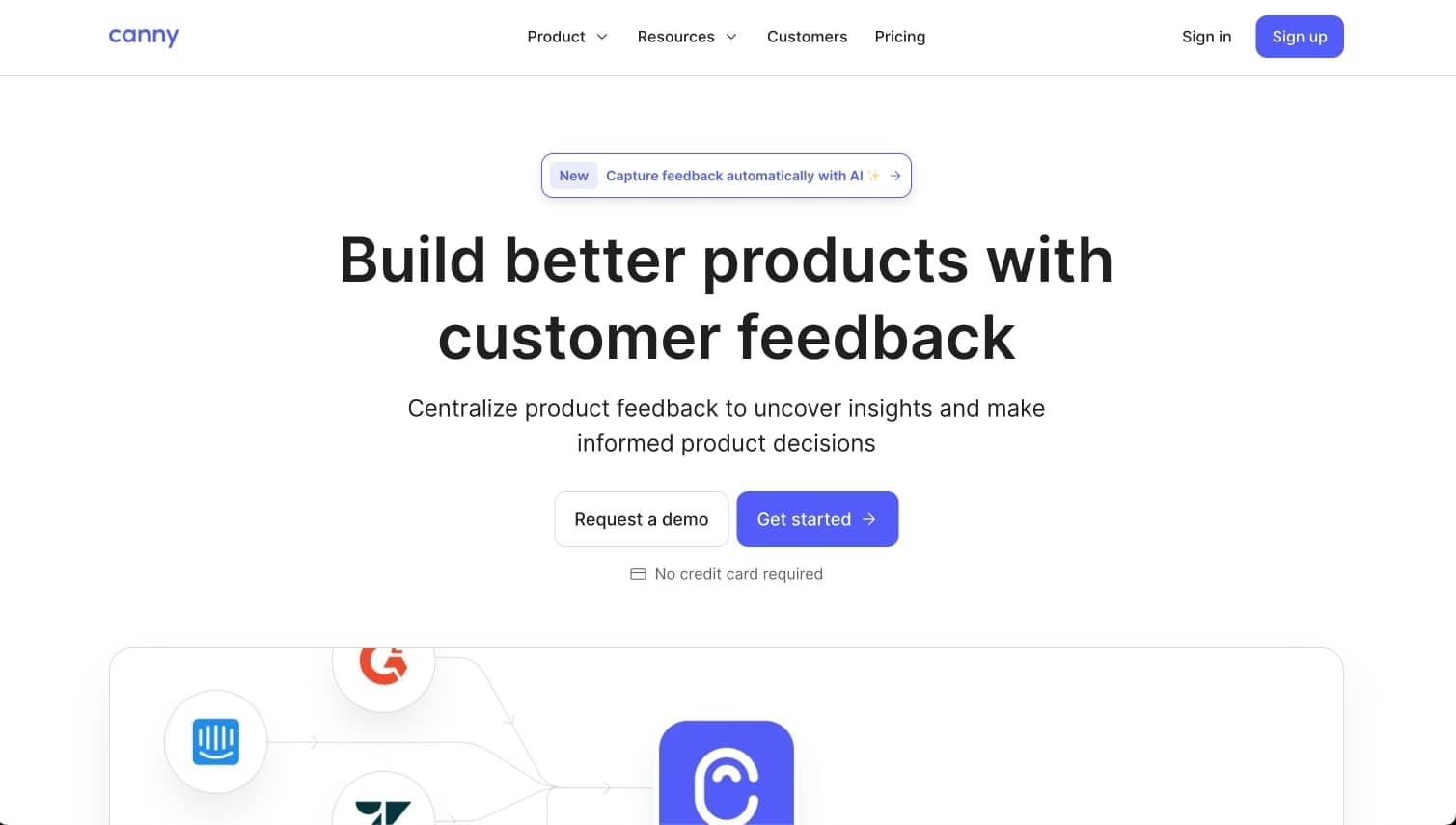
Canny is relevant when release notes need to sit next to feedback boards and roadmaps.
Teams already using Canny for feature requests often like having a visible place to close the loop after something ships. The connection between "we heard you" and "here's what we built" is genuinely useful — and Canny makes it easy to show that chain.
Best for: Product teams already invested in a feedback-board workflow.
Strengths:
- Feedback, roadmap, and changelog in one environment
- Clear close-the-loop communication for existing request flows
- Familiar product category for many SaaS teams
Tradeoff: It's less compelling if your primary goal is rich in-app release communication or post-launch adoption work.
6. ReleaseNotes.io
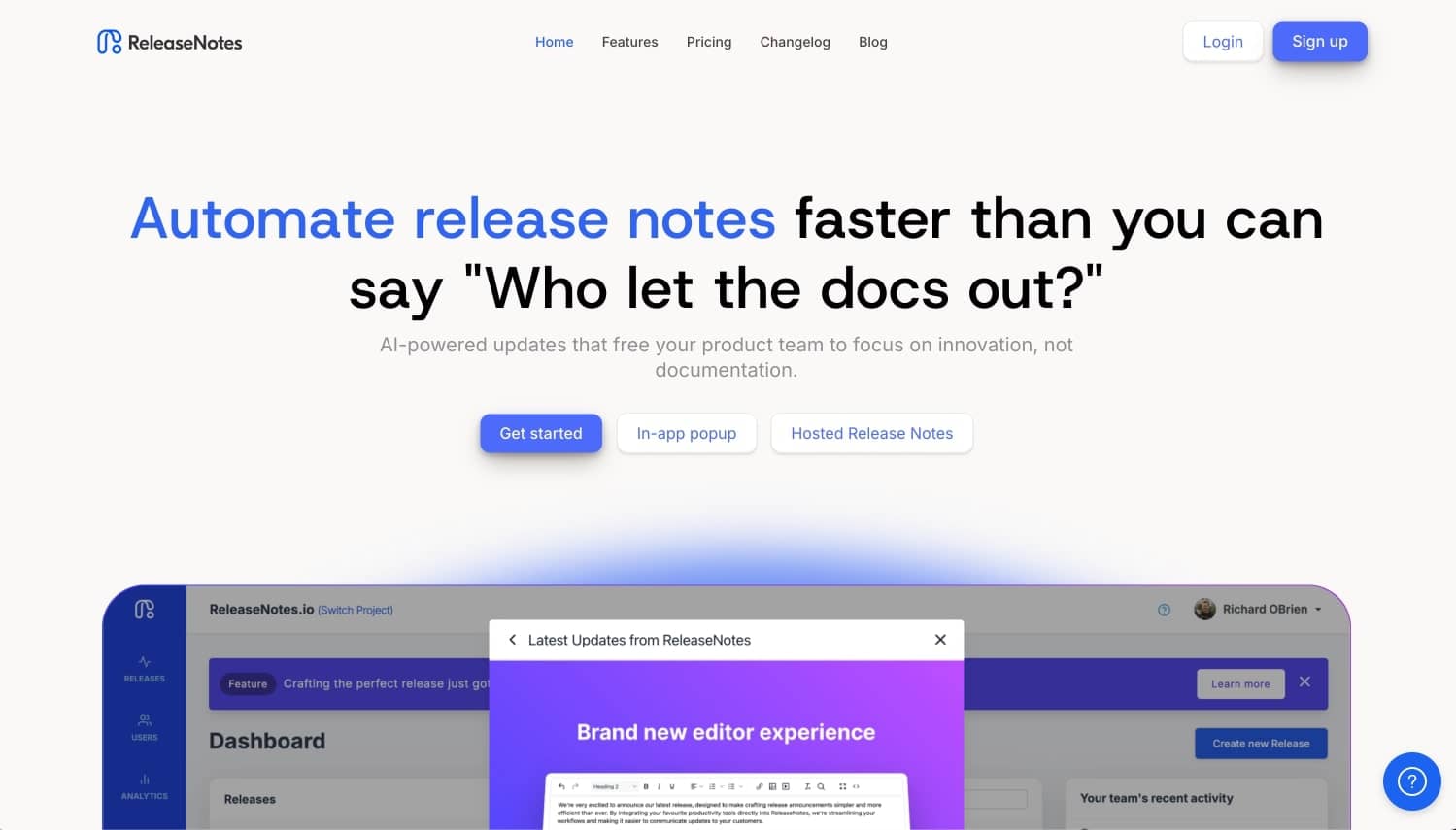
ReleaseNotes.io is a focused option for teams that want dedicated release notes software without adopting a wider product-ops suite.
That narrow scope can be a positive. If the surrounding stack is already set and you just need a clean place to publish updates, it doesn't force you into tooling you don't need.
Best for: Teams that want a release-notes-specific workflow with minimal extra surface area.
Strengths:
- Focused product scope
- Easier to evaluate than broader all-in-one platforms
- Works well when the team already has separate tools for onboarding and feedback
Tradeoff: The stack fragments quickly once you need announcements, targeting, or downstream adoption workflows.
7. Headway
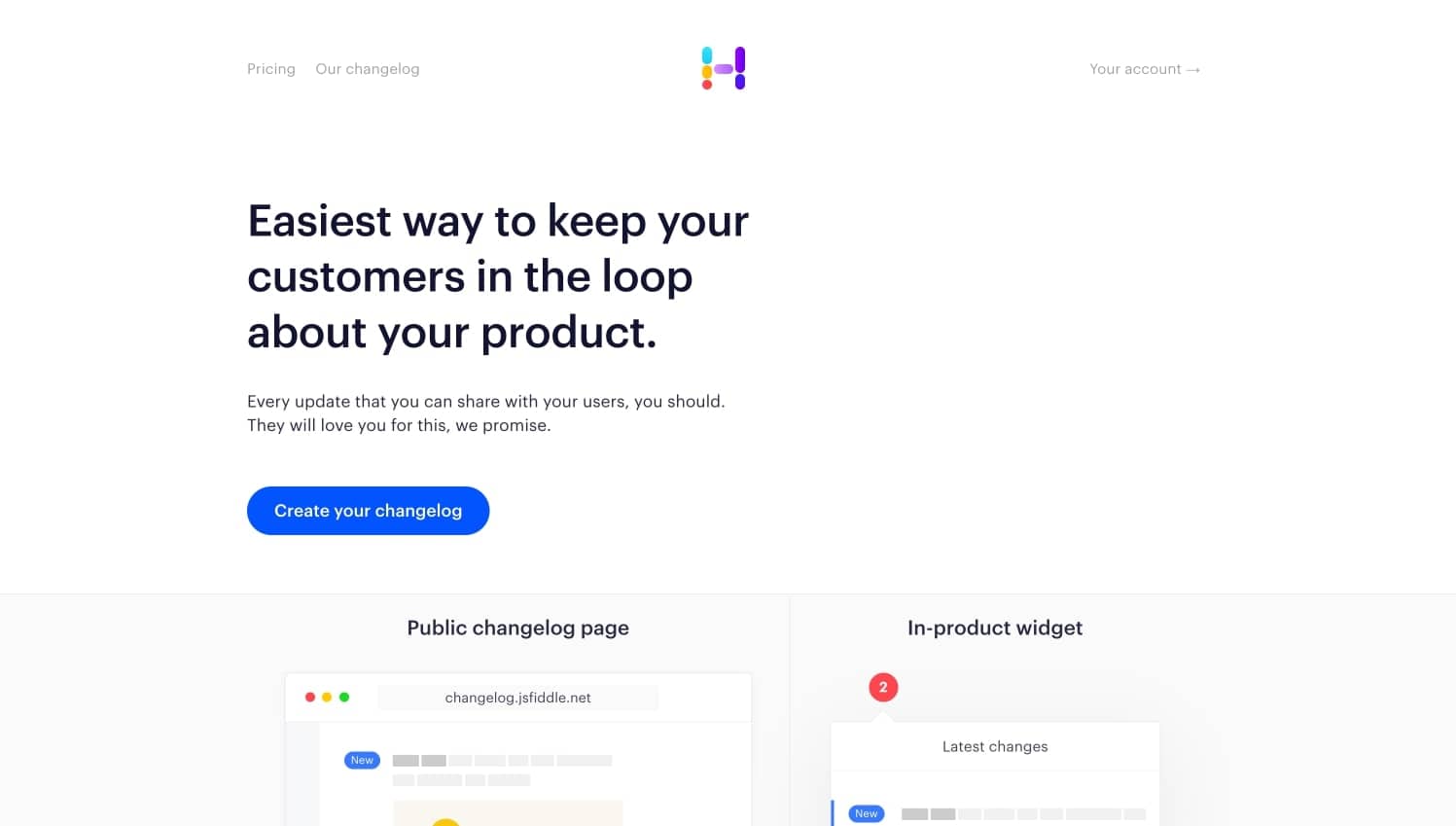
Headway stays attractive for smaller SaaS teams because it's easy to understand and easy to launch.
You get a public changelog and widget without much ceremony. For an early-stage team that needs to establish a release communication habit before worrying about sophistication, that's enough.
Best for: Early-stage teams that need simple release notes and low operational overhead.
Strengths:
- Simple setup path
- Lightweight public changelog experience
- Good value for basic release communication
Tradeoff: As segmentation and product communication needs grow, the simplicity becomes a ceiling.
8. Productboard
Productboard is less of a pure release notes pick and more of a roadmap-first choice.
It becomes relevant when the product organization wants launches to connect back to prioritization, customer evidence, and longer planning cycles. If your product team is large and structured around roadmap discipline, it fits. If you mainly need to publish faster, it doesn't.
Best for: Mature product organizations where release communication is part of a broader planning process.
Strengths:
- Strong strategic product planning context
- Useful connection between roadmap evidence and launched work
- Good fit for larger PM organizations
Tradeoff: For most SaaS teams, it's more platform than release notes workflow.
9. Notion
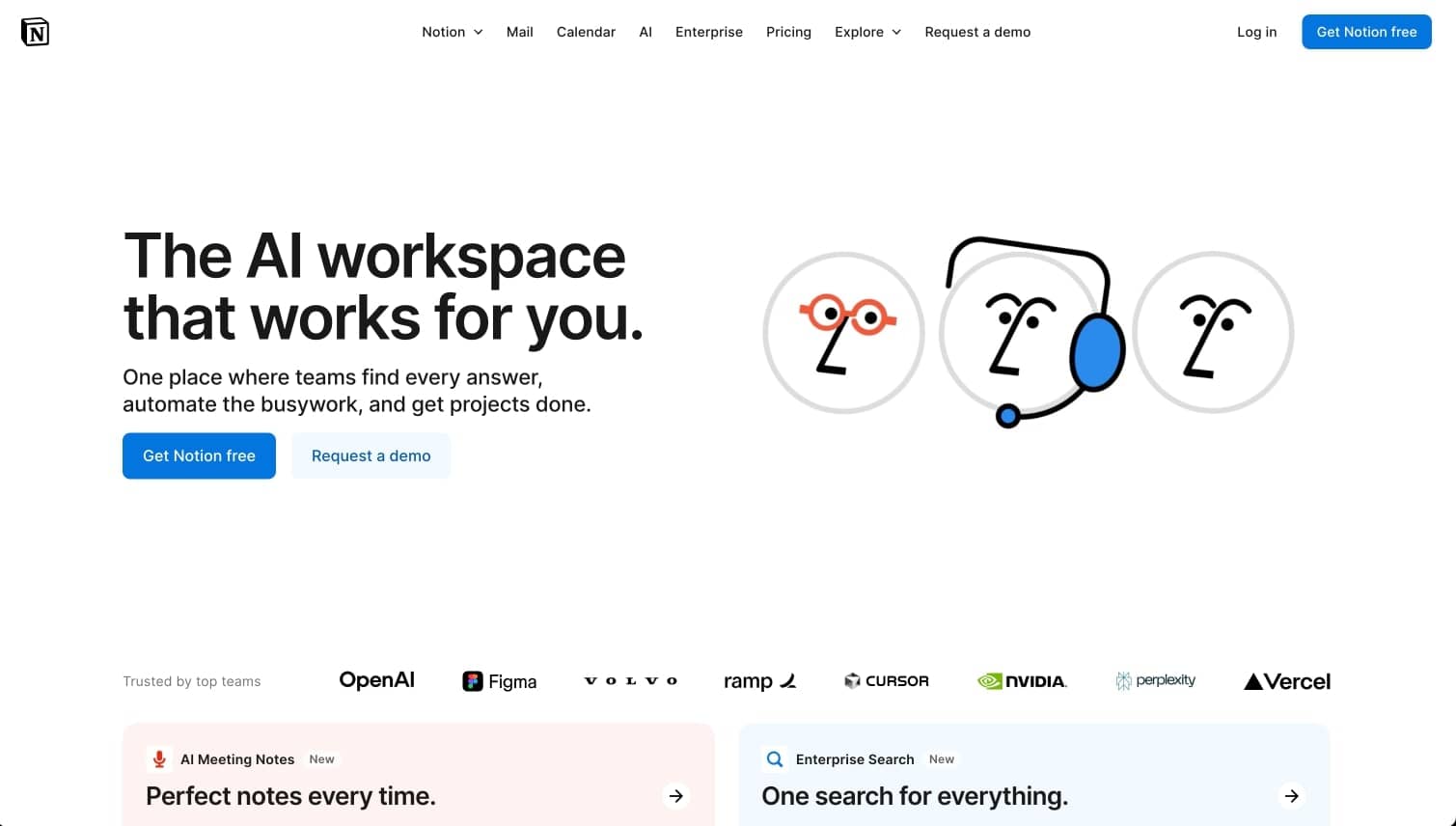
Notion keeps showing up in release notes conversations because plenty of teams already use it and want a low-friction DIY option.
That can work early on. A simple release log in Notion is better than no release communication at all. But it doesn't scale well, and it doesn't solve the distribution problem.
Best for: Very small teams that want a flexible and familiar DIY setup.
Strengths:
- Already present in many internal workflows
- Easy to publish quickly
- Low barrier for teams building a release habit
Tradeoff: It lacks the targeting, distribution, and purpose-built customer experience of real release notes software.
10. Olvy

Olvy is a focused changelog and release notes tool with a cleaner writing experience than most alternatives.
The editor is faster to work with than broader platforms, and widget integration is straightforward. If your team needs a place to write and publish release notes without building a full process around it, Olvy is easy to adopt.
Best for: Teams that want a clean, purpose-built writing and publishing experience for release notes.
Strengths:
- Clean editor designed for release note writing
- In-product widget and notification support
- Simpler setup than broader platforms
Tradeoff: Scope is narrow. Targeting, onboarding workflows, and adoption analytics aren't part of the product.
11. Featurebase
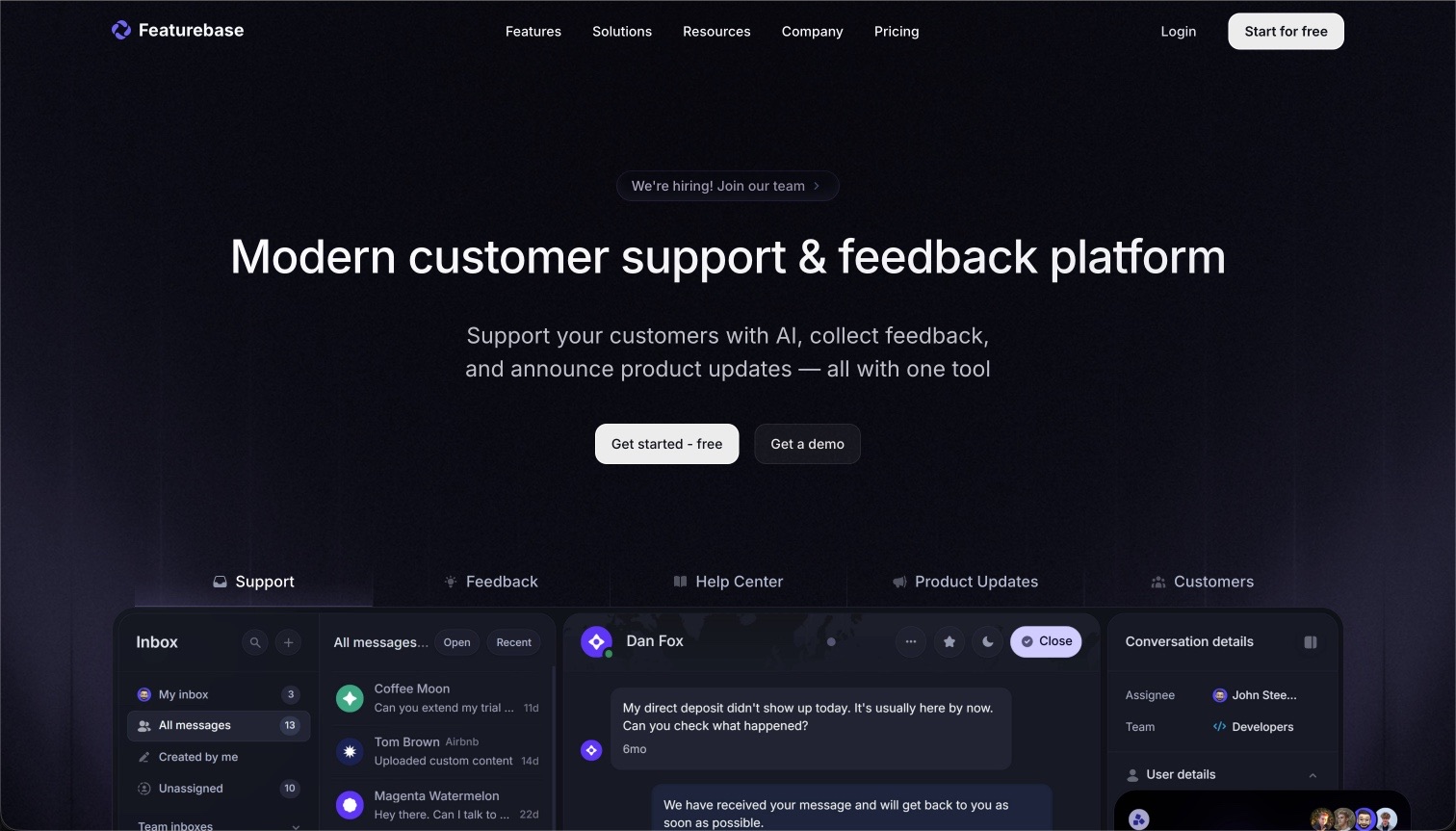
Featurebase combines feedback boards, public roadmaps, and a changelog in one tool.
It's closest in positioning to Canny. If you want a single home for feature requests, roadmap visibility, and close-the-loop updates, Featurebase covers all three. It's a reasonable choice for teams that don't want to manage separate tools for each workflow.
Best for: Product teams that want feedback collection, roadmap, and changelog in one workspace.
Strengths:
- Feedback and changelog in one product
- Public roadmap that connects directly to shipped updates
- Easier to maintain than managing three separate tools
Tradeoff: The release communication layer is basic. In-app distribution and segmentation aren't part of the core product.
12. Noticeable
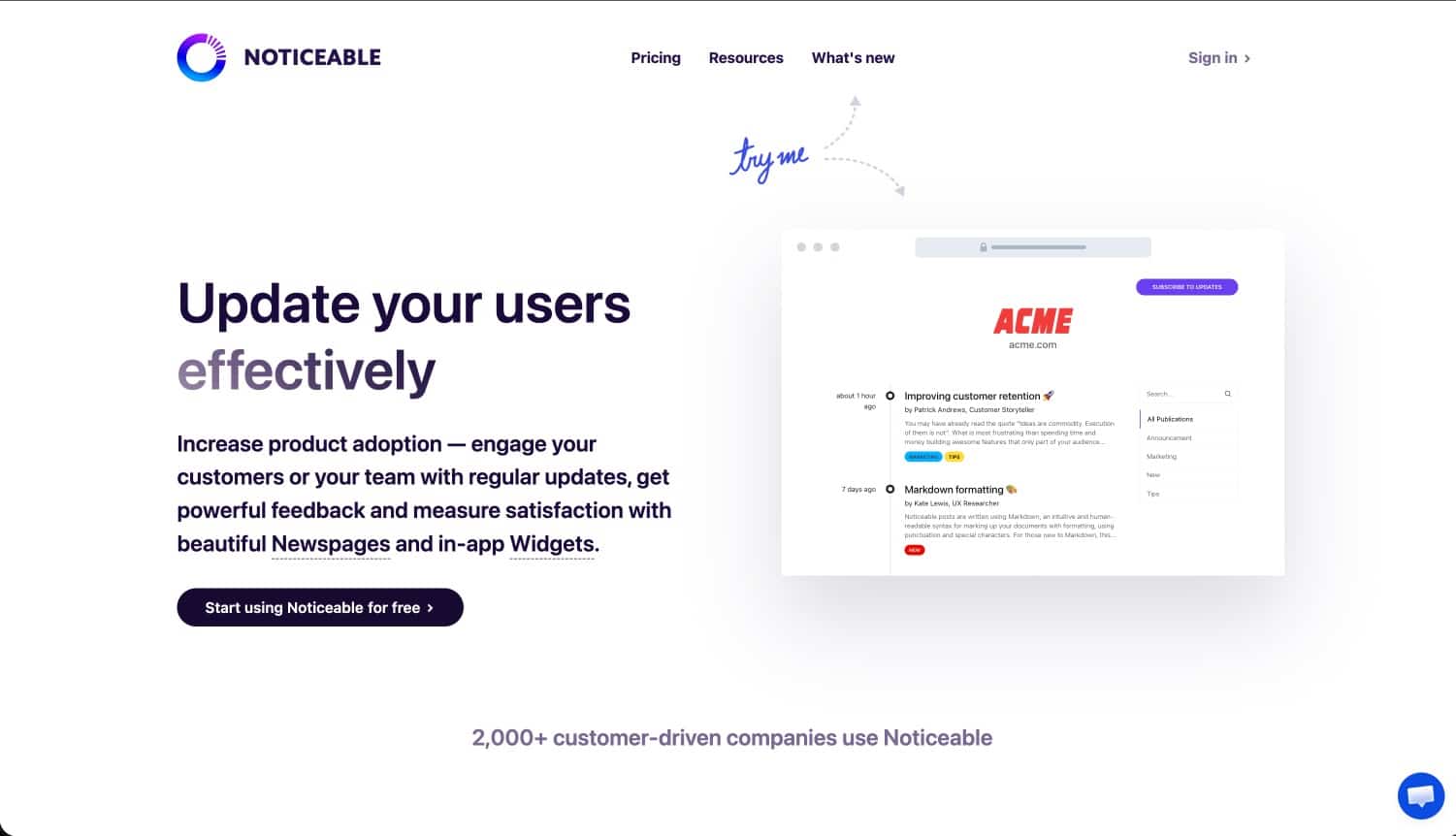
Noticeable is a lightweight changelog and announcement tool built around a notification widget.
The focus is on making updates visible inside the product through a badge and feed. Setup is fast, and the widget handles the distribution problem without much configuration. It's a practical choice when the goal is simple in-app visibility rather than a full communication system.
Best for: Teams that want a quick in-app notification widget for product updates.
Strengths:
- Fast setup with minimal configuration
- In-product notification widget and badge
- Good for lightweight announcement visibility
Tradeoff: It doesn't extend far beyond publishing and widget display. Segmentation, onboarding, and analytics live elsewhere.
13. Pendo

Pendo is an analytics and in-app guidance platform. Release notes aren't the core use case, but its announcement and guide features become relevant when teams are already using Pendo for onboarding or product analytics.
If you're already paying for Pendo, using it for in-app release announcements makes sense. Buying it specifically for release notes doesn't.
Best for: Product teams already using Pendo for analytics or onboarding that want in-app release announcements without adding a new vendor.
Strengths:
- In-app announcement and guide tooling built on real user segmentation
- Strong analytics layer for measuring what happens after an announcement
- Works well when the team already lives in Pendo
Tradeoff: It's an expensive platform to adopt purely for release communication. The release notes surface isn't purpose-built.
14. Intercom
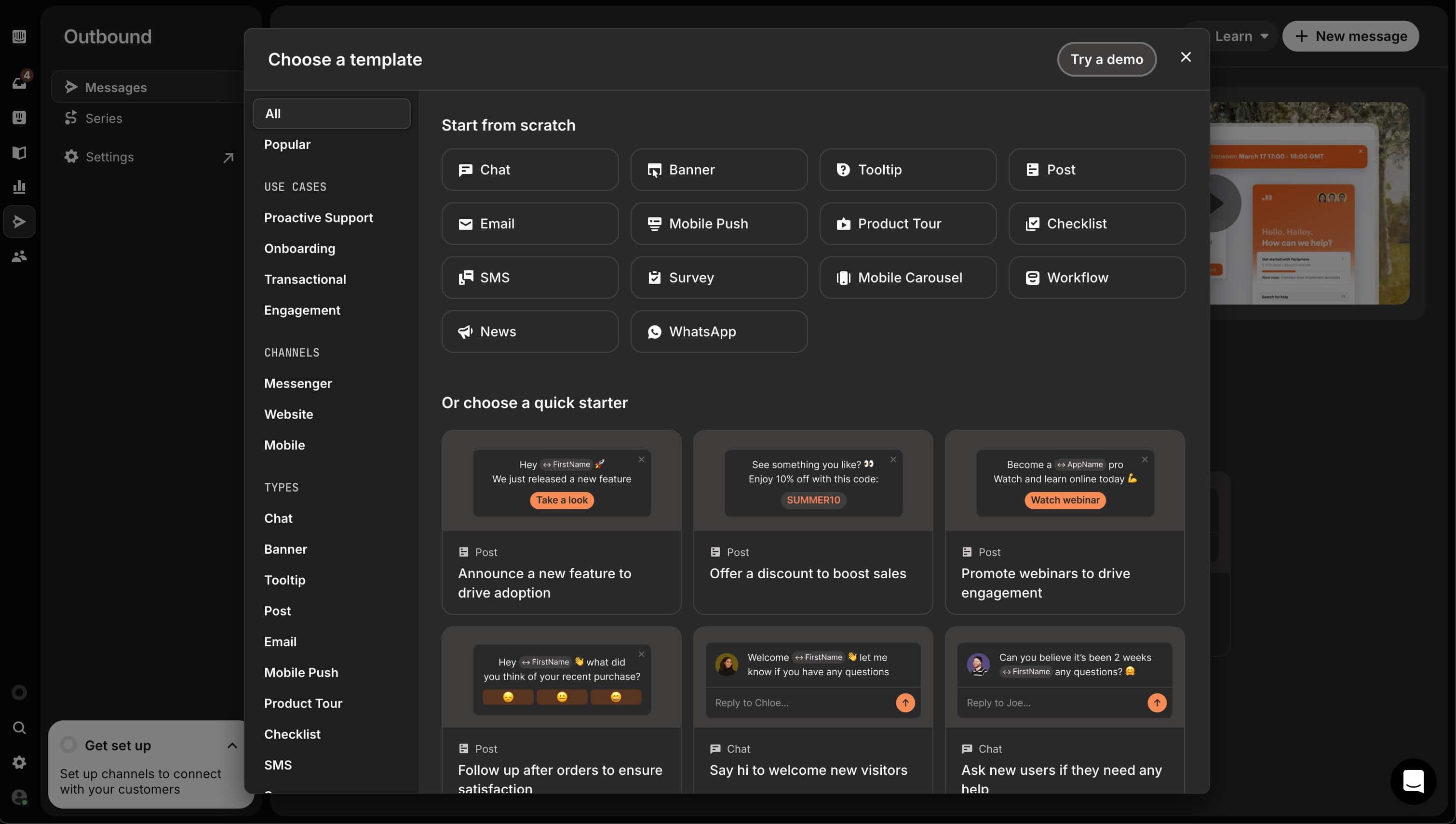
Intercom has product tours, in-app banners, and a news feed that can serve as a release communication channel.
Teams already using Intercom for support often try to handle announcements through the same tool. That works for basic updates. But release communication is secondary to Intercom's support and messaging core, and that shows in the workflow.
The buying math also spans more than a support seat. Our Intercom alternatives guide for B2B SaaS compares the support, announcement, and feedback workflows that sit behind the base price.
Best for: Teams already on Intercom that want to push occasional product updates through their existing messaging stack.
Strengths:
- In-app announcements via banners and news feed
- No separate tool if you're already paying for Intercom
- Connects updates to an existing user communication workflow
Tradeoff: The changelog experience is limited, and distribution feels bolted on rather than designed for product updates.
15. Appcues

Appcues is an in-app experience platform focused on onboarding flows, tooltips, and product tours. It includes announcement capabilities, but the main use case is guiding users through the product.
If your release communication challenge is about driving adoption after a feature ships, Appcues is relevant. It's less useful if you mainly need a public changelog or a place to document what shipped.
Best for: Teams focused on post-launch adoption that want to guide users to new features with in-app flows.
Strengths:
- Strong in-app flow builder for post-launch feature adoption
- Good segmentation for targeted guided announcements
- Complements release notes with hands-on feature discovery
Tradeoff: It's an onboarding and adoption tool first. Public changelog, structured release notes, and multi-audience communication aren't strengths.
Comparison table
| Tool | Best for | In-app distribution | Feedback/roadmap adjacency | Broader adoption workflows |
|---|---|---|---|---|
| Userorbit | SaaS teams tying release notes to adoption | |||
| LaunchNotes | Structured multi-audience release comms | Limited / workflow dependent | Limited | Partial |
| AnnounceKit | Polished release pages and widgets | Partial | Limited | |
| Beamer | In-app update center style delivery | Limited | Partial | |
| Canny | Feedback plus close-the-loop updates | Partial | ||
| ReleaseNotes.io | Focused release-notes-only workflow | Limited | ||
| Headway | Lightweight public changelog needs | Partial | ||
| Productboard | Roadmap-first product orgs | Limited | ||
| Notion | DIY internal-to-public release logs | |||
| Olvy | Clean writing and publishing experience | Partial | ||
| Featurebase | Feedback, roadmap, and changelog combo | Partial | ||
| Noticeable | Simple in-app widget visibility | Partial | ||
| Pendo | Teams already using Pendo for analytics | Limited | ||
| Intercom | Teams already on Intercom for support | Limited | Partial | |
| Appcues | Post-launch in-app feature adoption |
Choosing the right tool for your team
The right tool depends on what job release notes are supposed to do inside your company.
If publishing consistency is the main problem, a lightweight product like AnnounceKit, Headway, or ReleaseNotes.io is often enough. These help you establish a habit without introducing a large operational system.
If visibility is the problem, the issue isn't that you don't publish — it's that users don't see it. Beamer and Userorbit are stronger here because updates move inside the product instead of sitting on a page that requires a separate visit.
If release notes are part of a broader product engagement goal, a focused changelog tool won't be enough. You're really trying to solve a chain:
- Tell users what shipped
- Guide the right segment to the feature
- Reinforce discovery with onboarding or announcements
- Measure whether the launch changed behavior
If that's the real need, a broader platform creates less friction than stitching together three separate tools.
Common mistakes when picking release notes software
Treating the hosted page as the whole strategy. A clean release notes page looks good in screenshots. That doesn't guarantee anyone reads it. Teams often overvalue the publishing surface and undervalue distribution.
Publishing every update to every user. Too much release communication trains users to ignore the channel. The better tools support segmentation so you can control what gets promoted and to whom.
Ignoring the post-release workflow. The release note is often only the first step. A major launch may also need an in-app announcement, a checklist, a help doc, or a feedback capture loop. Tools that support those neighboring workflows age better as the product grows.
Optimizing for features instead of maintenance effort. A release notes tool that nobody keeps updated isn't a real system. The best choice is often the one your team can run every week without turning it into a side project.
Final take
Userorbit is the best release notes tool in 2026 for SaaS teams that want release communication to drive product discovery — not sit in a passive archive.
LaunchNotes fits more formal stakeholder communication. AnnounceKit and Headway are solid for lighter publishing workflows. Beamer works well when in-app visibility is the priority. Canny makes sense when release notes already sit inside a feedback process.
The bigger decision isn't whether you need a release notes page. It's whether your release notes should just document shipping, or help users discover what changed.
If the second job matters, weight distribution, targeting, and adoption workflows more heavily than page design.
FAQs
What's the difference between release notes software and changelog software?
The terms overlap a lot. Release notes software usually emphasizes the communication layer around product updates, while changelog software can imply a chronological update archive. In practice, the strongest tools support both.
Do SaaS teams still need release notes if they already send product emails?
Yes. Email helps with broadcast communication, but release notes give you a durable home for updates. The better workflows use both, then add in-app distribution for the releases that matter most.
What's the best release notes tool for product marketers?
For product marketers, the strongest option is usually one that combines polished publishing with targeting and in-app promotion. That keeps launches visible after the first announcement instead of limiting them to a static update page.
What's the best simple release notes tool for startups?
If simplicity is the only priority, Headway or AnnounceKit are easier to adopt. If you expect release communication to connect with onboarding and adoption later, starting with a broader platform reduces future tool sprawl.