










Userback is one of those tools that teams adopt because the initial promise is very sensible.
Collect feedback. Capture screenshots. Let users report bugs without turning every issue into a vague Slack message. Move faster.
That promise is still good.
But as teams mature, the question changes.
They stop asking, "How do we collect feedback?"
They start asking:
- how do we connect feedback to roadmap decisions?
- how do we close the loop after shipping?
- how do we handle feedback, feature requests, and announcements in one system?
- how do we avoid another isolated tool that stores comments but not context?
That is where the search for Userback alternatives starts.
This guide compares the best Userback alternatives for product feedback in 2026, focusing on teams that want more than a bug-report widget.
Why teams look for Userback alternatives
1. Feedback collection is only one part of the job
Capturing screenshots and comments is useful.
But product teams usually need a bigger workflow:
- collect feedback
- organize it
- prioritize it
- tie it to roadmap decisions
- announce the outcome back to users
If the tool only handles the first step well, the rest of the process still lives in spreadsheets, docs, or internal guesswork.
2. Product teams want more context, not just more submissions
A wall of feedback is not automatically insight.
Teams want segmentation, account context, trends, and the ability to understand whether the same pain point is repeating across different user groups.
3. Closing the loop matters more than most vendors admit
A lot of feedback tools are optimized for intake.
Fewer are great at communicating back out.
That matters because customers do not just want a form to fill out. They want evidence that what they shared influenced the product.
4. Lean teams want fewer tools in the stack
When feedback lives in one tool, changelogs in another, announcements in another, and onboarding in yet another, operations get messy fast.
Growing SaaS teams usually want consolidation, not another dashboard.
What to look for in a Userback alternative
If you are evaluating replacements, look beyond the feedback widget itself.
The best Userback alternative should help with:
- feedback collection across web and in-app surfaces
- bug reporting with enough context to reproduce issues
- roadmap or prioritization workflows
- announcements or changelog support to close the loop
- segmentation and targeting
- analytics that help separate noise from signal
- practical implementation for product, support, and growth teams
In short, choose the tool that helps your team make better product decisions, not just gather more opinions.
Best Userback alternatives in 2026
1. Userorbit - Best overall for feedback plus close-the-loop workflows
Userorbit feedback and product engagement platform
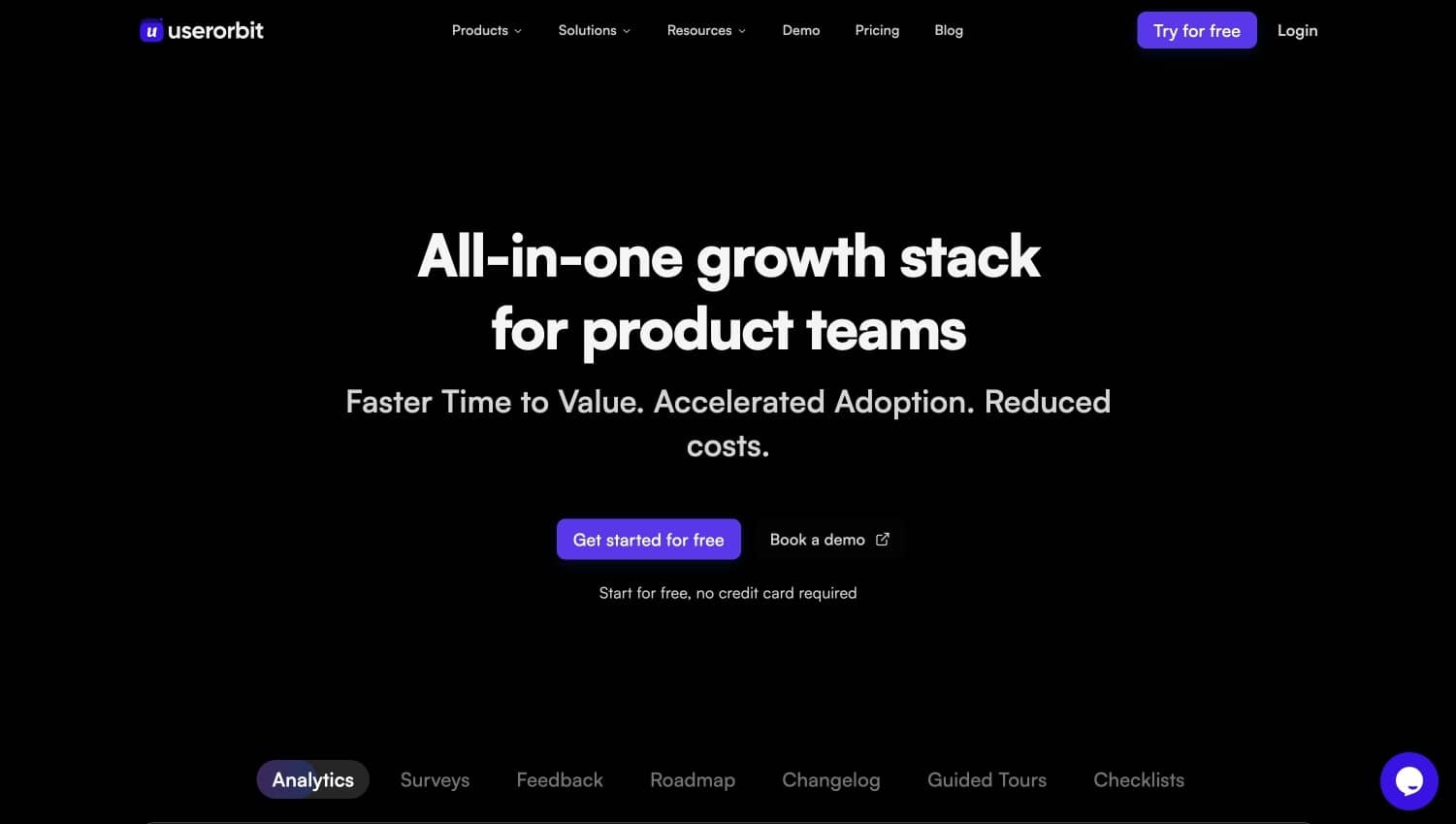
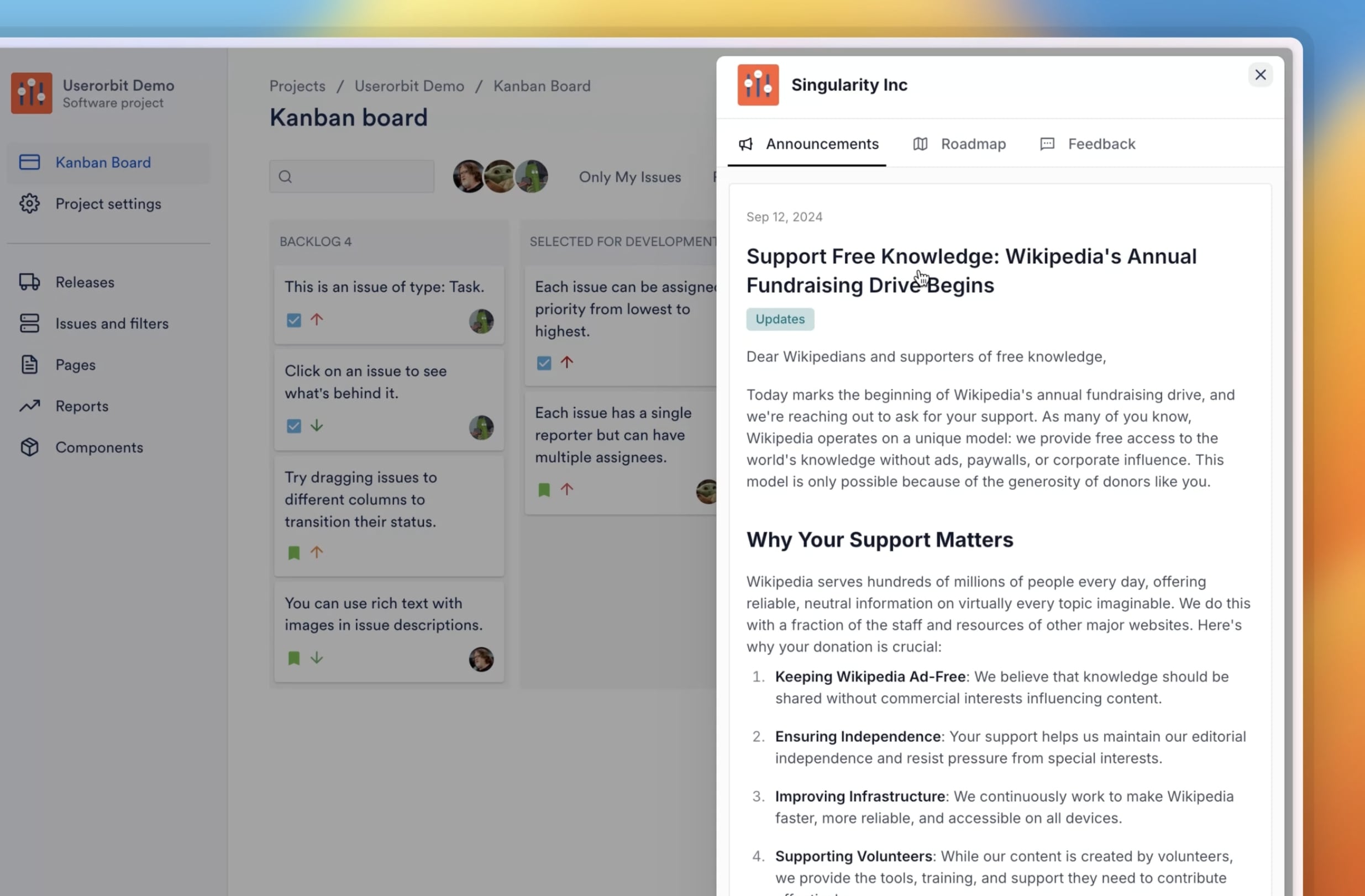
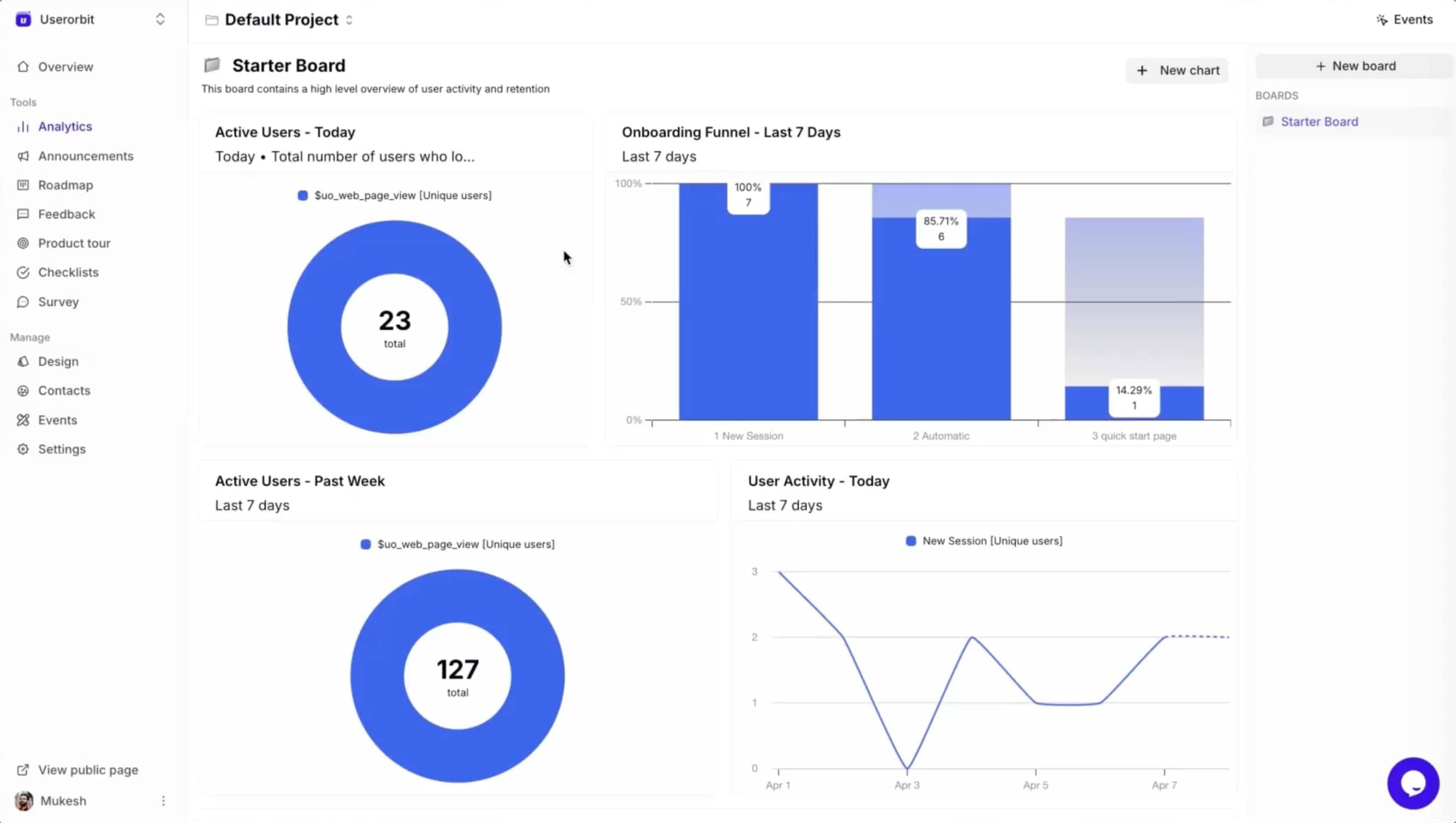
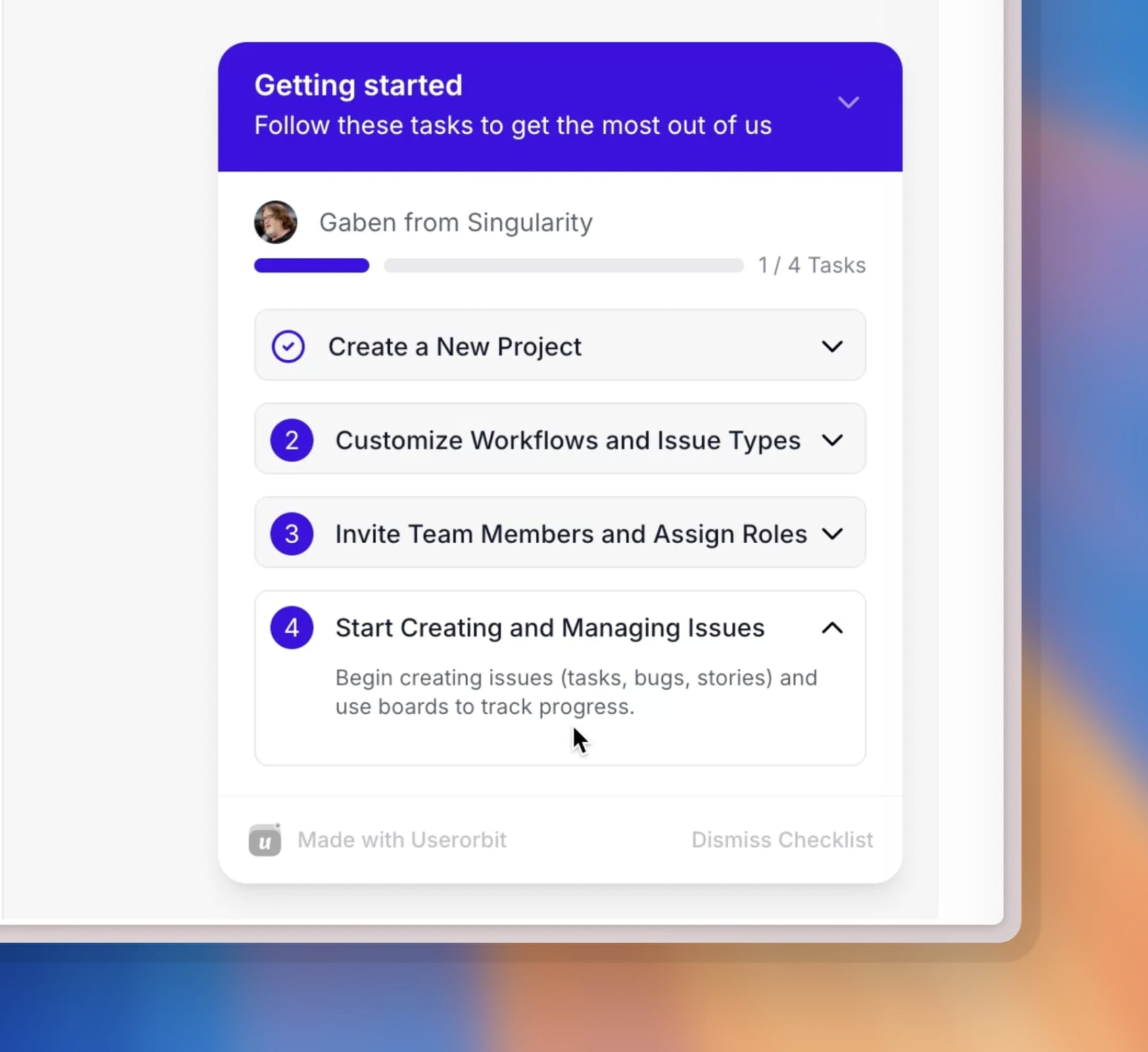
Userorbit is the strongest Userback alternative for SaaS teams that want feedback collection connected to the rest of the product communication stack.
It does not stop at intake.
Teams can collect feedback, manage announcements, publish changelogs, and connect user input to broader product engagement workflows. That makes it a better fit for companies that want one system for gathering signals and communicating outcomes.
Why Userorbit stands out
Most feedback platforms focus on capture.
Userorbit is better if your actual goal is a full loop:
- capture feedback
- understand patterns
- act on it
- announce what changed
- drive adoption after release
That is a more useful workflow for product-led SaaS teams.
Best for
Teams that want feedback, announcements, and changelog workflows in one platform instead of stitching together multiple tools.
Collect feedback and close the loop from one place
2. Canny - Best for feedback boards and roadmap visibility
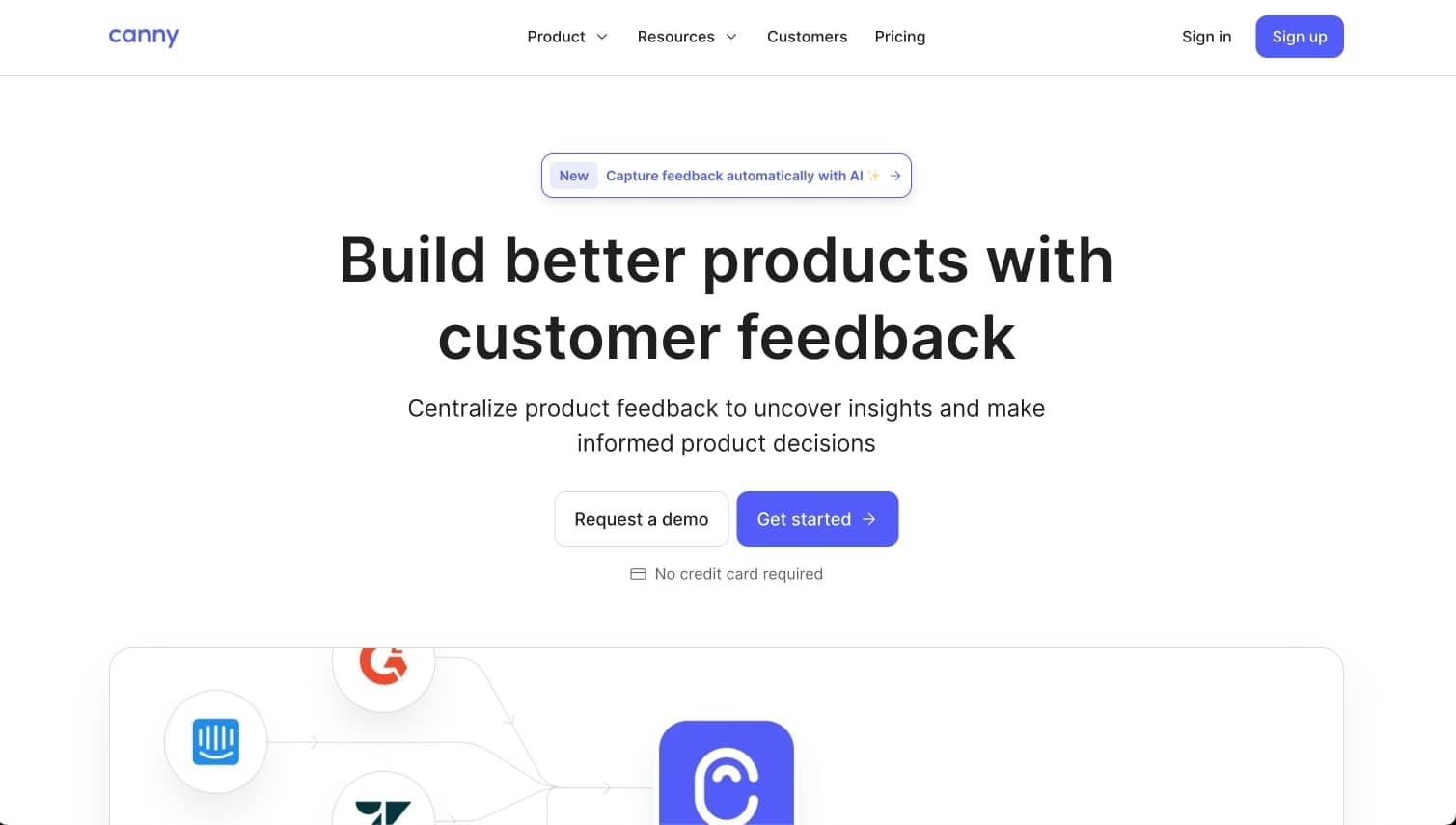
Canny remains one of the most recognized tools in the feedback space for a reason.
It gives teams a clean structure for collecting feature requests, tracking demand, and sharing a public roadmap.
Strengths
- strong feedback board model
- public roadmap workflows
- useful for feature request management
- familiar product ops pattern for SaaS companies
Tradeoff
If your team needs more in-app engagement and adoption workflows beyond feedback boards, you may still end up adding extra tools.
3. Productboard - Best for product organizations with mature prioritization workflows

Productboard is a serious option when feedback needs to feed directly into deeper product planning and prioritization processes.
Strengths
- strong product management workflow depth
- good for organizing customer evidence at scale
- useful when leadership wants strategic product planning connected to feedback
Tradeoff
It is often more system than an early-stage SaaS team actually needs, and the operational overhead can be higher.
4. Usersnap - Best for visual bug reporting and internal QA collaboration
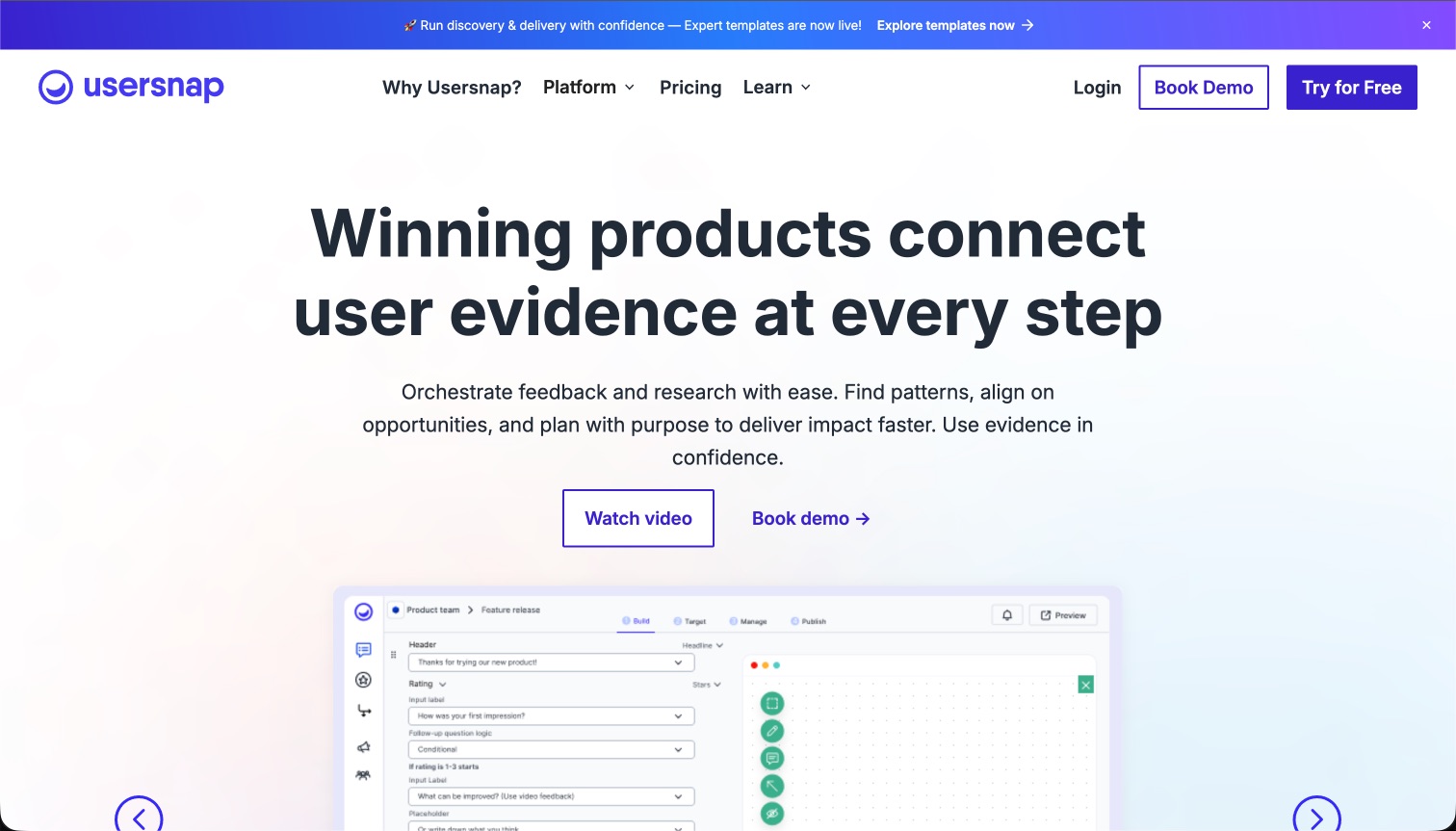
Usersnap is a strong alternative when the team cares a lot about screenshots, annotations, and bug reporting context.
Strengths
- visual feedback and bug capture
- practical for design, QA, and support collaboration
- easier issue reproduction than plain text feedback forms
Tradeoff
It is strongest around capture and reporting. It is less differentiated if your priority is roadmap communication or broader product engagement.
5. Frill - Best for simple feedback boards and changelogs
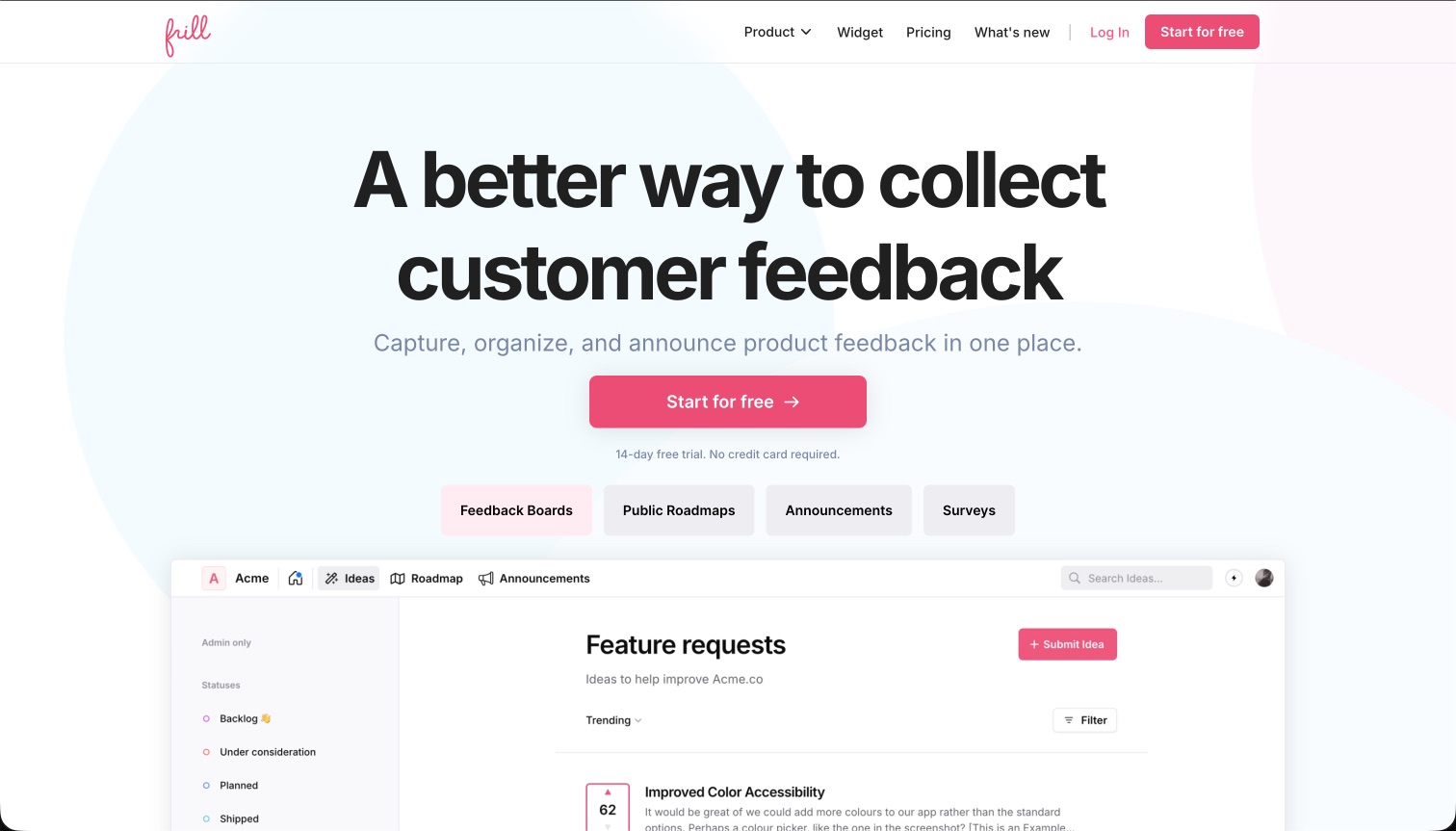
Frill appeals to teams that want a lighter-weight customer feedback system with public-facing communication features.
Strengths
- feedback board plus changelog combination
- simpler setup than heavier enterprise products
- good for startups that want a straightforward public loop
Tradeoff
It may feel limited once the team wants richer segmentation, deeper analytics, or more advanced workflow automation.
6. Featurebase - Best for feedback with modern SaaS ergonomics
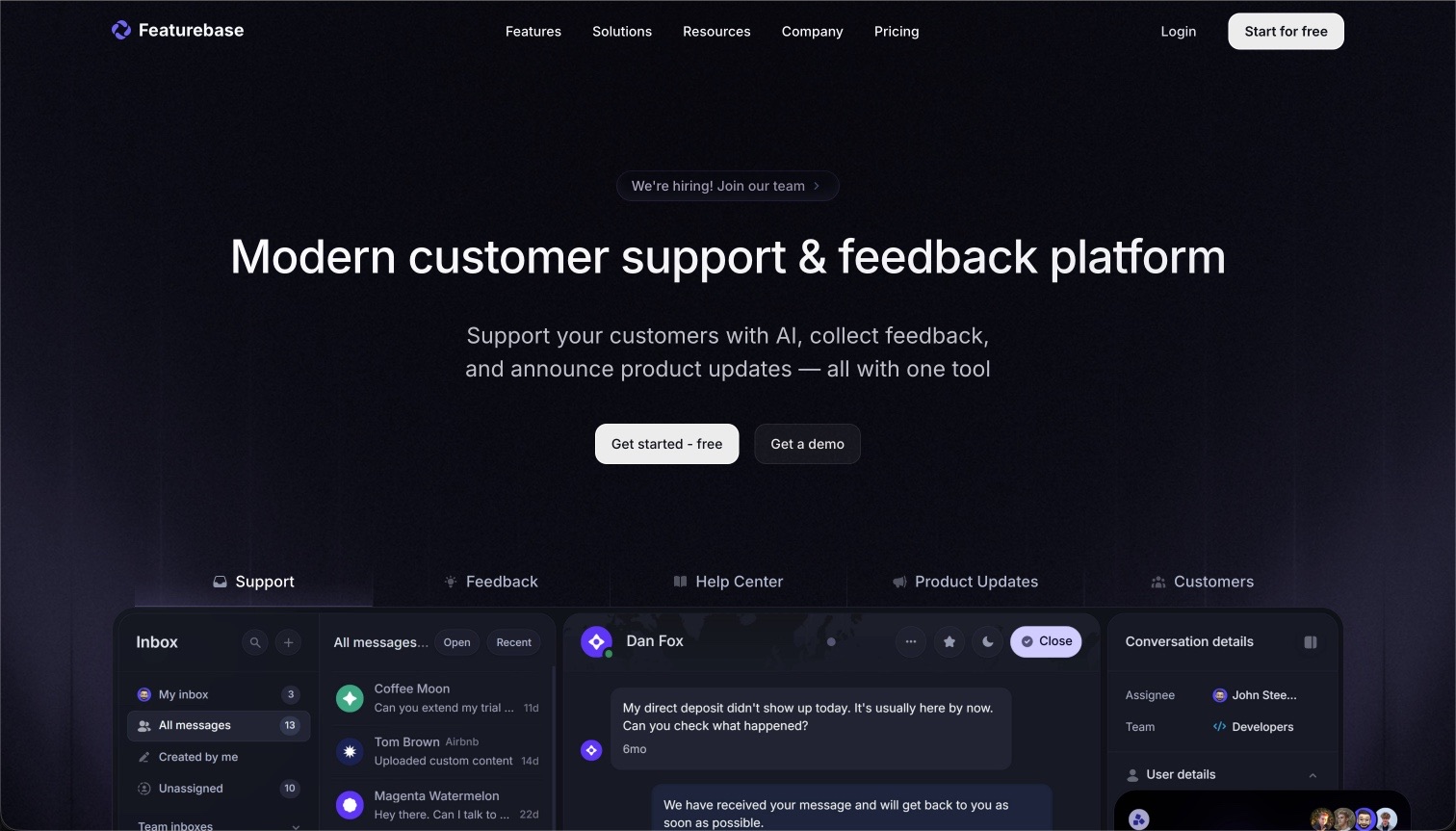
Featurebase has gained attention because it gives teams feedback boards, roadmaps, and release communication in a package that feels more modern than many legacy tools.
Strengths
- good balance of feedback, roadmap, and changelog workflows
- friendly for product-led SaaS teams
- strong fit for closing the loop publicly
Tradeoff
The biggest question is whether it covers enough of your broader adoption workflow or whether you still need separate onboarding and engagement tools.
7. Upvoty - Best for straightforward feature voting
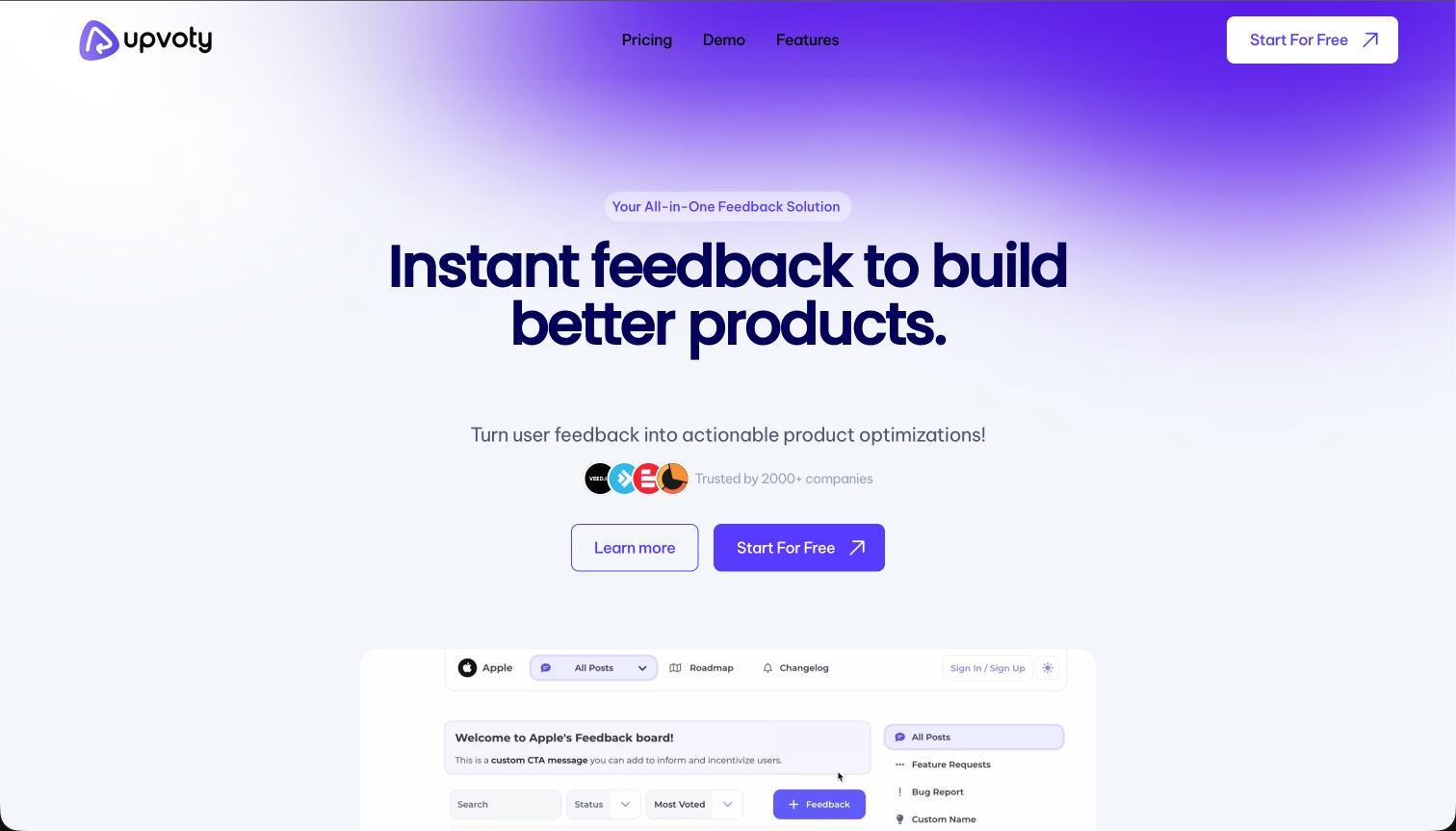
Upvoty is useful for teams that mainly want customer voting and feedback boards without a huge amount of process around them.
Strengths
- simple and easy to understand
- useful for feature request collection
- low operational overhead
Tradeoff
It is lighter on product ops depth and does not try to be a full product engagement platform.
8. Pendo - Best if feedback must sit next to product analytics

Pendo is not a direct Userback clone, but it becomes relevant when a team wants feedback connected to product analytics and in-app guidance.
Strengths
- strong analytics footprint
- feedback and guidance in one broader suite
- useful for larger organizations that already think in terms of product analytics instrumentation
Tradeoff
For many growing SaaS teams, Pendo is more expensive and more operationally heavy than the use case requires.
9. Hotjar - Best for qualitative insight alongside session behavior

Hotjar is not a dedicated feedback board tool, but it is still a common alternative path because teams often realize they need behavioral context as much as direct comments.
Strengths
- session recordings and heatmaps add context
- surveys and feedback widgets are easy to deploy
- helpful for diagnosing friction visually
Tradeoff
Hotjar is better for qualitative research and UX context than for roadmap management or customer-facing close-the-loop workflows.
10. Notion plus forms - Best DIY option for tiny teams
Very small teams sometimes replace tools like Userback with a simple stack built from forms, docs, and manual review.
That can work for a while.
Strengths
- cheap and flexible
- easy to shape around internal process
- fine for low feedback volume
Tradeoff
It breaks down quickly once volume, prioritization needs, or customer communication expectations increase.
Comparison table
| Tool | Best for | Feedback depth | Roadmap / changelog support | Complexity | Fit for growing SaaS teams |
|---|---|---|---|---|---|
| Userorbit | Feedback plus close-the-loop workflows | High | High | Low to medium | Strong |
| Canny | Feature requests and roadmap boards | High | High | Medium | Strong |
| Productboard | Strategic product planning | High | Medium | High | Mixed |
| Usersnap | Visual bug reporting | Medium to high | Low | Low to medium | Good |
| Frill | Simple feedback plus changelog | Medium | Medium | Low | Good |
| Featurebase | Modern feedback + roadmap workflow | High | High | Medium | Strong |
| Upvoty | Lightweight voting boards | Medium | Low to medium | Low | Good |
| Pendo | Analytics-connected feedback | Medium | Medium | High | Mixed |
| Hotjar | UX context and qualitative insight | Medium | Low | Low | Good |
| Notion + forms | DIY startup setup | Low | Low | Low | Limited |
Which Userback alternative should you choose?
Choose Userorbit if you want
- feedback collection tied to announcements and changelogs
- one platform for collecting signals and communicating outcomes
- a product that fits lean SaaS teams better than a fragmented stack
- a workflow focused on closing the loop, not just opening tickets
Choose Canny if you want
- classic feature request boards
- public roadmap visibility
- a familiar product feedback workflow
Choose Productboard if you want
- deep prioritization workflows
- stronger strategic product planning infrastructure
- a more mature PM system around customer evidence
Choose Usersnap if you want
- visual bug reporting first
- screenshots, annotations, and reproduction context
- a stronger QA and support-oriented workflow
Choose Featurebase or Frill if you want
- a lighter modern tool that blends feedback with public communication
- a practical middle ground between simple capture and full PM infrastructure
Common mistakes when replacing Userback
1. Optimizing only for collection
More feedback does not automatically produce better decisions.
If the replacement makes intake easier but prioritization harder, you did not really improve the workflow.
2. Ignoring the close-the-loop step
Customers remember whether they felt heard.
That usually depends less on the form and more on whether updates are communicated back clearly.
3. Buying for enterprise complexity too early
A lot of teams overcorrect and jump from a simple feedback tool into a heavyweight PM suite they barely use.
That is not maturity. That is expensive procrastination.
Final take
Userback is still useful when the main job is collecting visual feedback and bug reports.
But many SaaS teams eventually need more than capture.
They need a system that helps them organize feedback, connect it to product decisions, and communicate back to users after shipping.
That is why the best Userback alternative is usually not the tool with the prettiest widget. It is the one that best supports the full loop from input to outcome.
For most growing SaaS teams in 2026, Userorbit is the strongest overall choice because it connects feedback to announcements, changelogs, and product engagement instead of leaving those workflows scattered across separate tools.